Online Oil Painting and Drawing Workshops
Train in the Tradition of Fine Art with John Varriano, American Artist
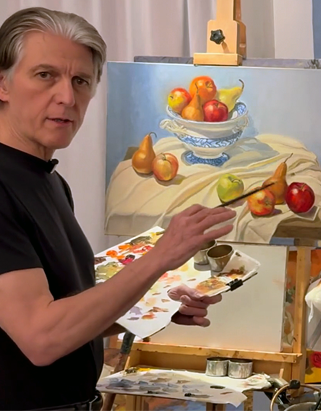
The self-paced, online workshops are designed for steady, progressive artistic development and include both oil painting and drawing instruction. Students may choose to study one discipline or pursue both, according to their interests and goals.
Each workshop is built around a carefully structured series of classes that develop skills progressively through demonstration, observation, and practice. New classes are added weekly, allowing students to continue their studies at their own pace while following a clear sequence of artistic development.
Online Oil Painting and Drawing Workshops
Train in the Tradition of Fine Art with John Varriano, American Artist
The self-paced, online workshops are designed for steady, progressive artistic development and include both oil painting and drawing instruction. Students may choose to study one discipline or pursue both, according to their interests and goals.
Each workshop is built around a carefully structured series of classes that develop skills progressively through demonstration, observation, and practice. New classes are added weekly, allowing students to continue their studies at their own pace while following a clear sequence of artistic development.
A New Class Every Week
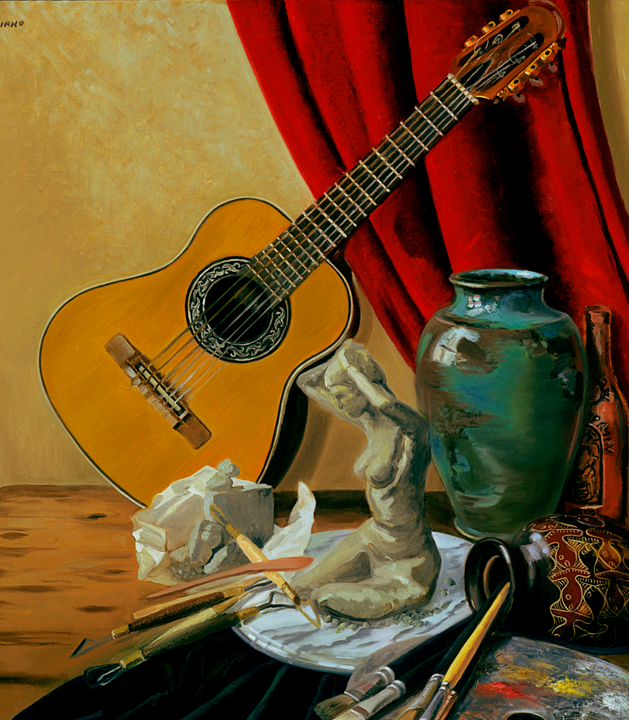
New oil painting and drawing classes are released every Sunday at 9:00 AM EST, providing ongoing instruction and steady artistic growth. Through clear demonstrations and step-by-step guidance, John Varriano helps students build confidence, refine technique, and create finished paintings with a professional level of craftsmanship.
Online Oil Painting and Drawing Workshops
Train in the Tradition of Fine Art with John Varriano, American Artist
The self-paced, online workshops are designed for steady, progressive artistic development and include both oil painting and drawing instruction. Students may choose to study one discipline or pursue both, according to their interests and goals.
Each workshop is built around a carefully structured series of classes that develop skills progressively through demonstration, observation, and practice. New classes are added weekly, allowing students to continue their studies at their own pace while following a clear sequence of artistic development.
A New Class Every Week
New oil painting and drawing classes are released every Sunday at 9:00 AM EST, providing ongoing instruction and steady artistic growth. Through clear demonstrations and step-by-step guidance, John Varriano helps students build confidence, refine technique, and create finished paintings with a professional level of craftsmanship.
A New Class Every Week
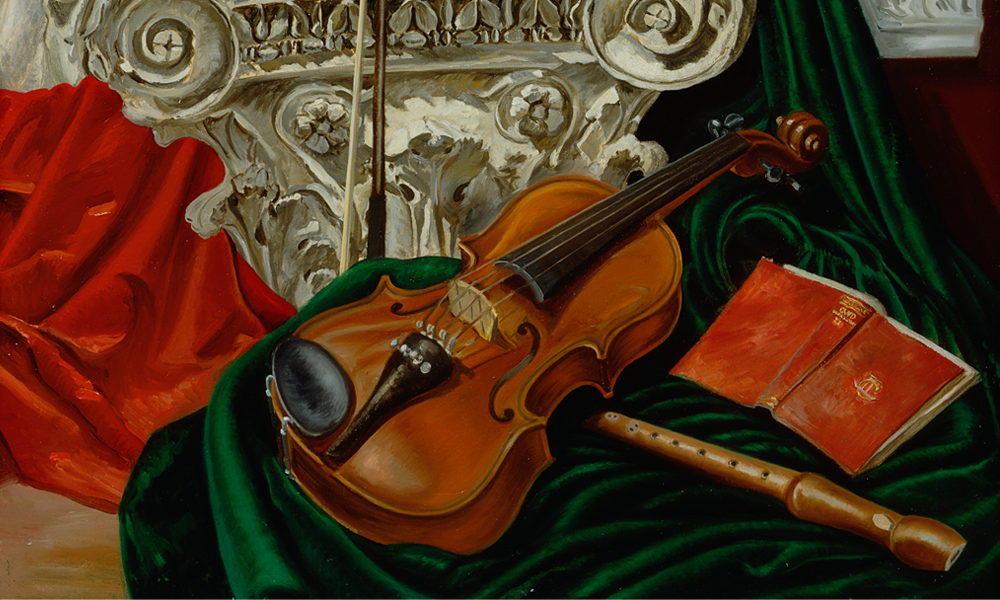
New oil painting and drawing classes are released every Sunday at 9:00 AM EST, providing ongoing instruction and steady artistic growth. Through clear demonstrations and step-by-step guidance, John Varriano helps students build confidence, refine technique, and create finished paintings with a professional level of craftsmanship.
To watch classes on your TV in full 4K resolution simply open the internet browser on your smart TV and visit Varriano Fine Arts, or stream the lessons by screen mirroring from your phone, tablet, or laptop.
To watch classes on your TV in full 4K resolution simply open the internet browser on your smart TV and visit Varriano Fine Arts, or stream the lessons by screen mirroring from your phone, tablet, or laptop.
Latest Classes
Latest Classes
Latest Classes
Sunday, 09.06.26
Lessons are added in sequential order as each workshop progresses. Students are welcome to preview newly released classes at any time, but for the strongest artistic development, we recommend following each workshop in its intended sequence.
If you have not yet reached the latest class in a workshop, simply continue scrolling to follow the lessons in sequence.
Sunday, 09.06.26
Lessons are added in sequential order as each workshop progresses. Students are welcome to preview newly released classes at any time, but for the strongest artistic development, we recommend following each workshop in its intended sequence.
If you have not yet reached the latest class in a workshop, simply continue scrolling to follow the lessons in sequence.
Sunday, 09.06.26
Lessons are added in sequential order as each workshop progresses. Students are welcome to preview newly released classes at any time, but for the strongest artistic development, we recommend following each workshop in its intended sequence.
If you have not yet reached the latest class in a workshop, simply continue scrolling to follow the lessons in sequence.
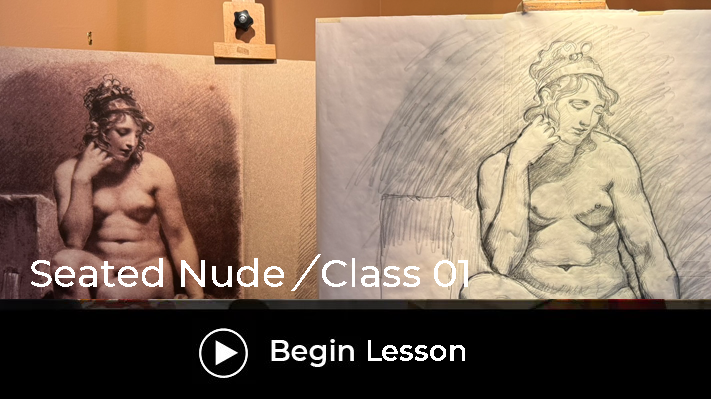
Preparing to Paint
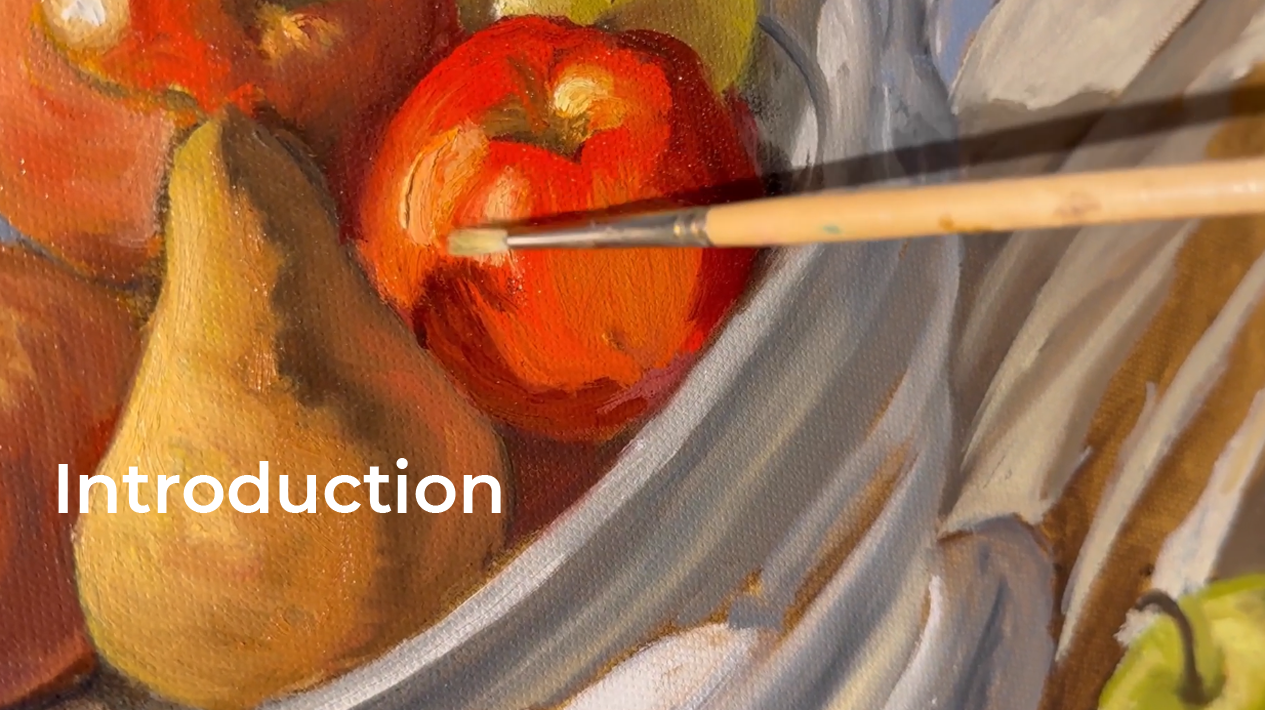
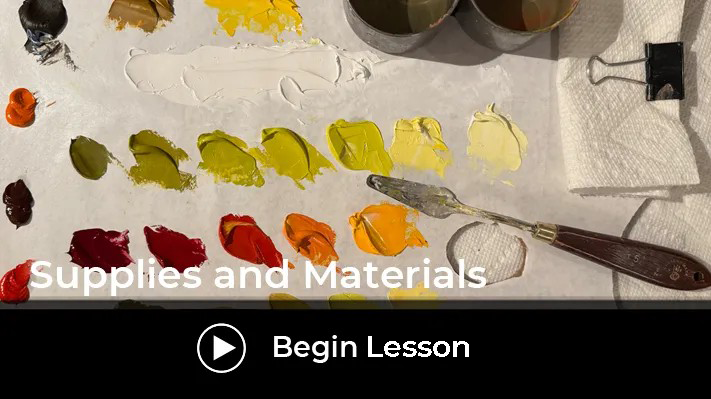
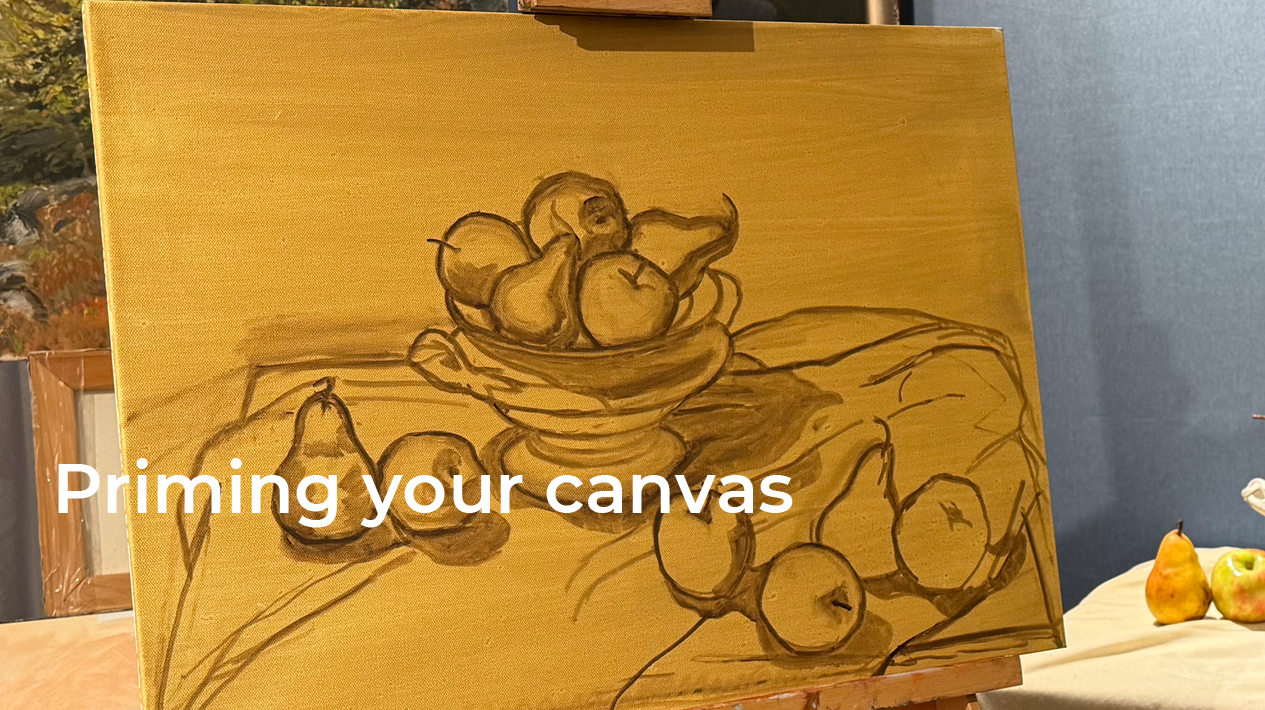
Preparing to Paint
Preparing to Paint
Preparing to Draw
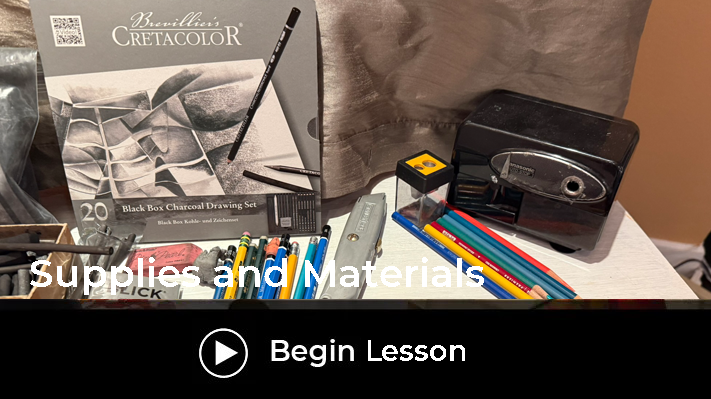

Preparing to Draw
Preparing to Draw
Workshop
Workshops
Still Life with Apples and Pears
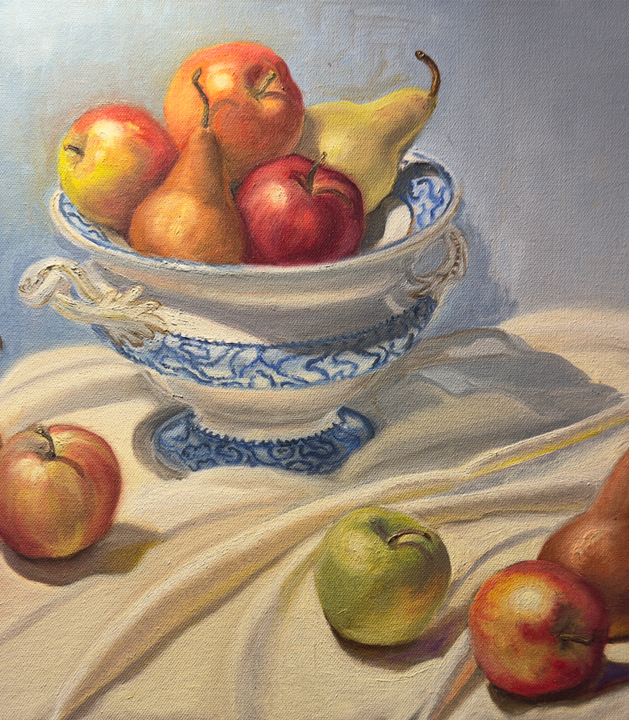
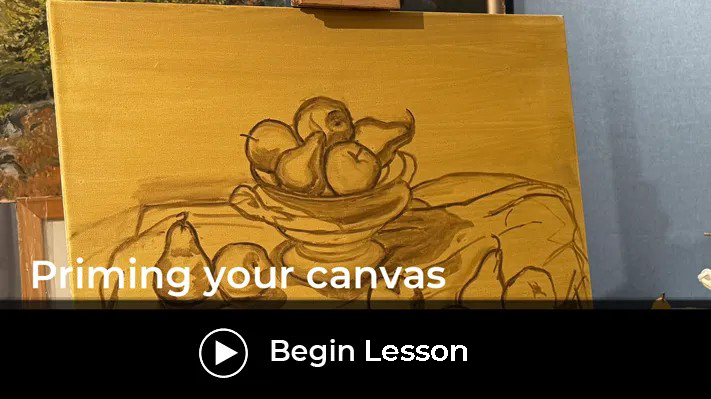
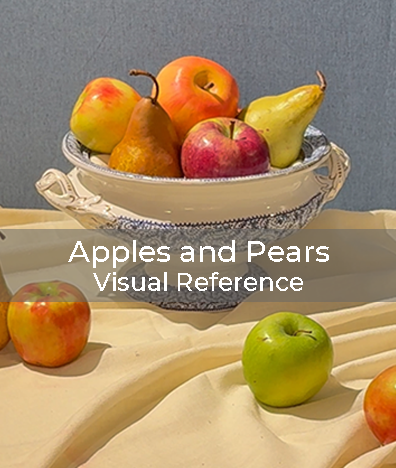
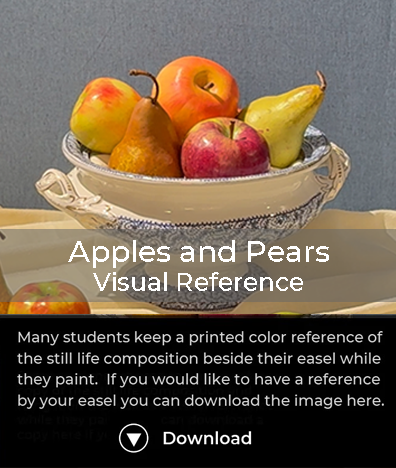
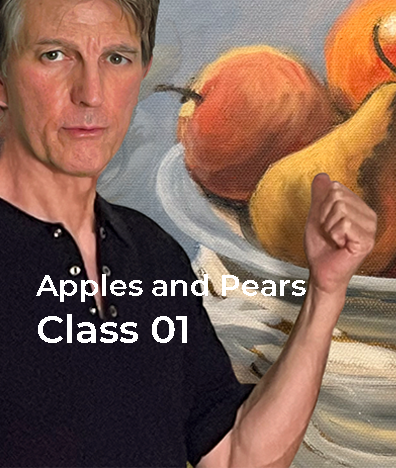
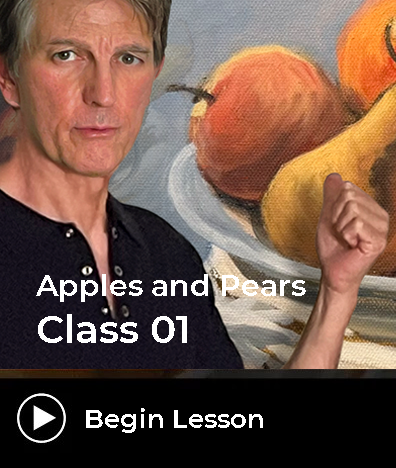
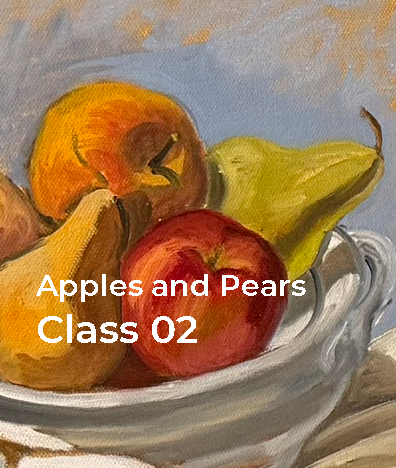
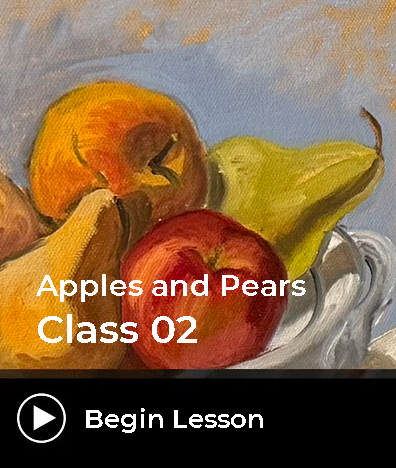
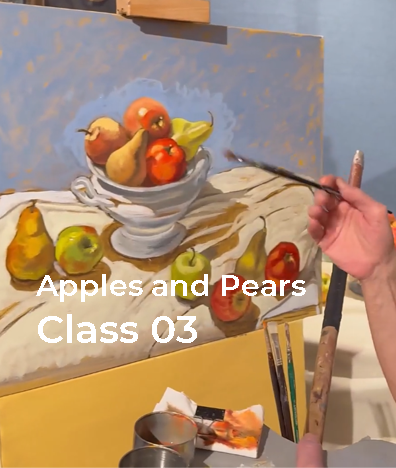
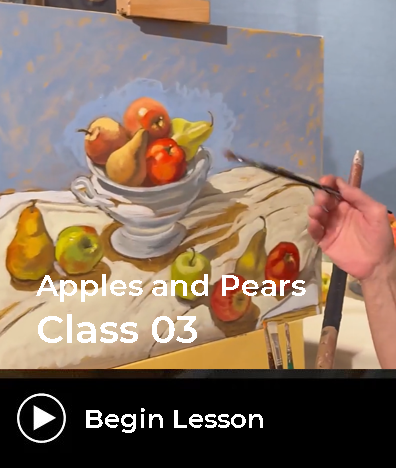
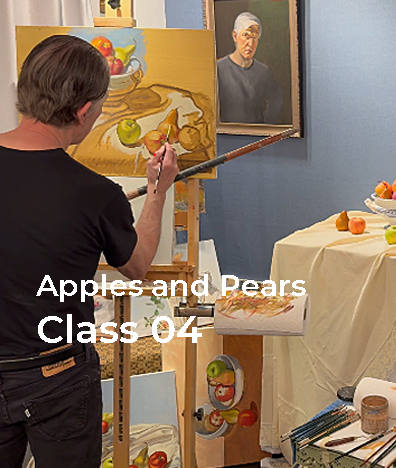
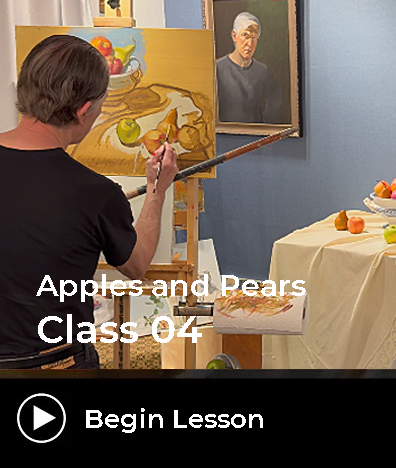
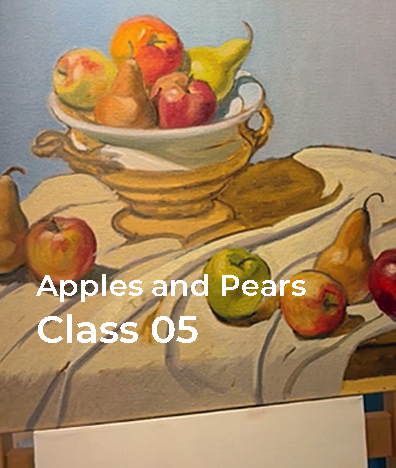
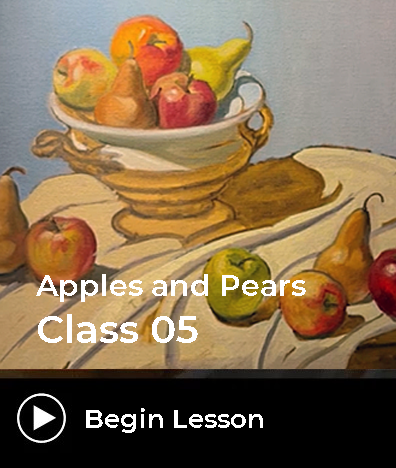
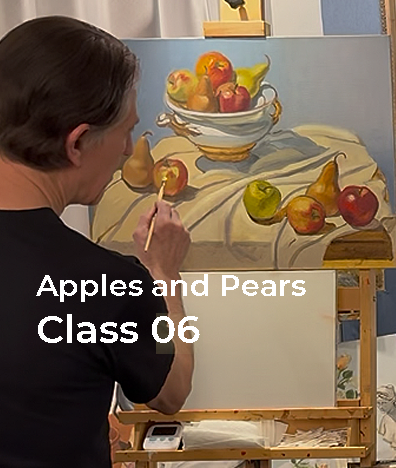
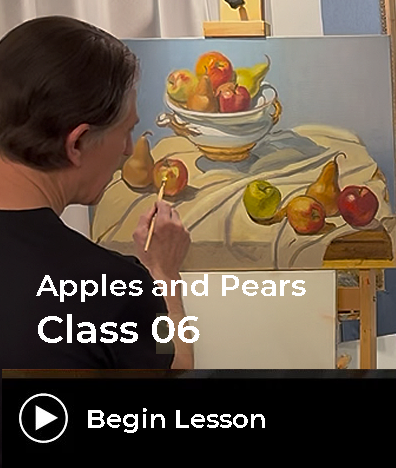
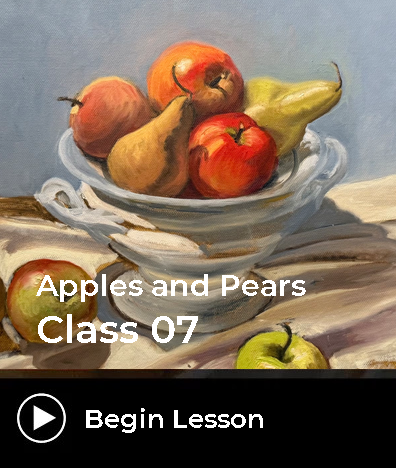
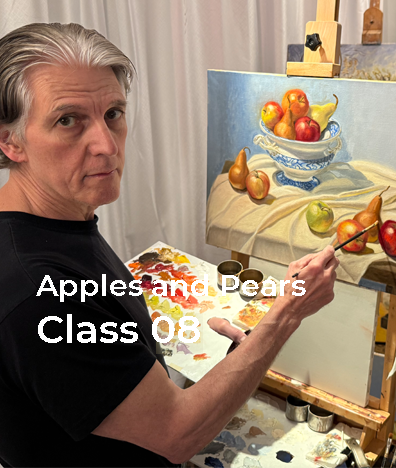
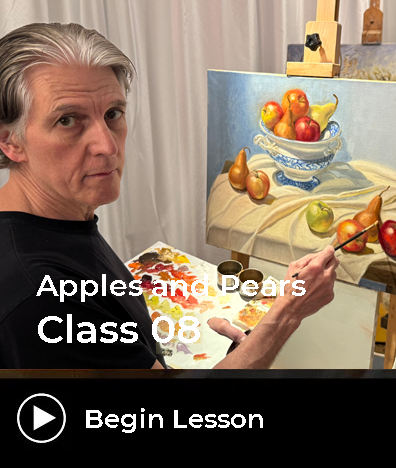
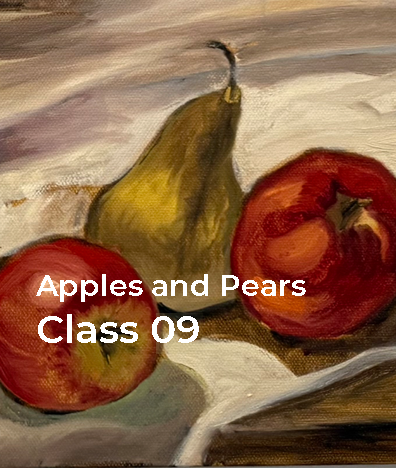
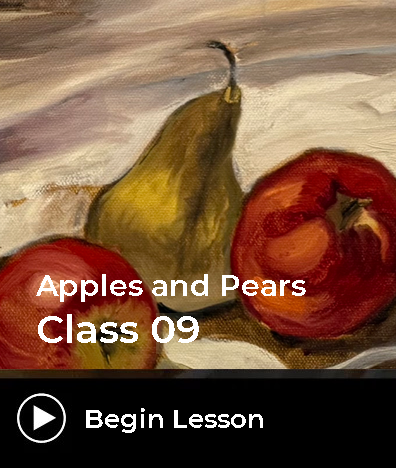
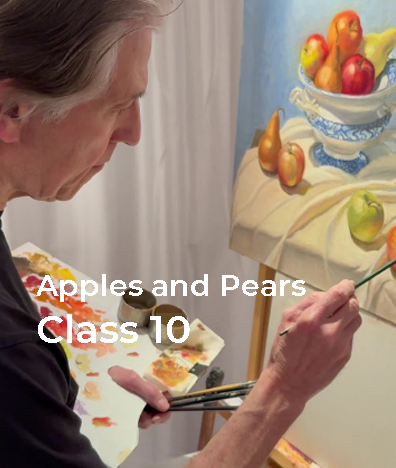
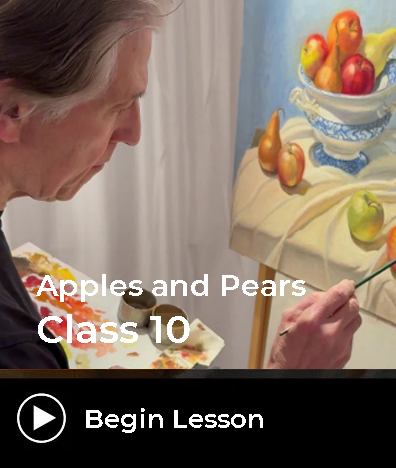
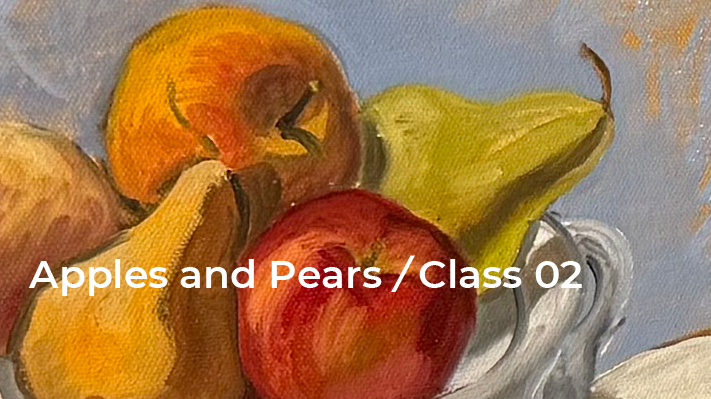
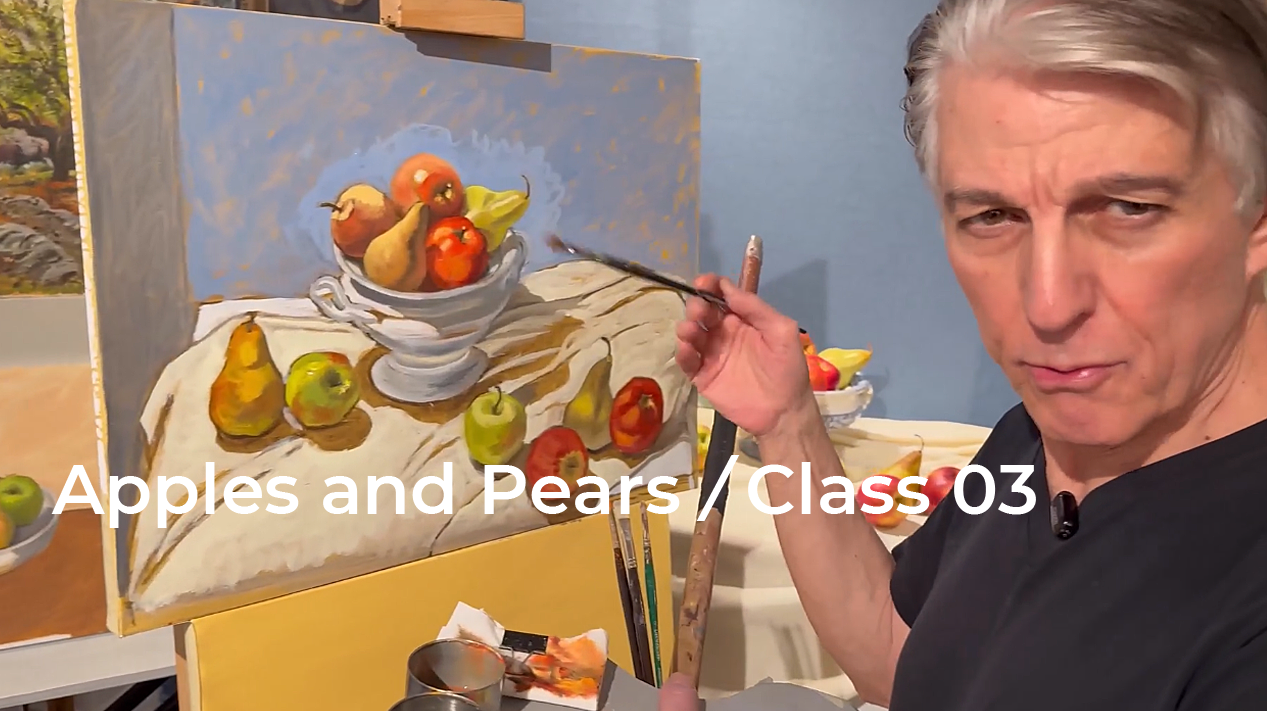
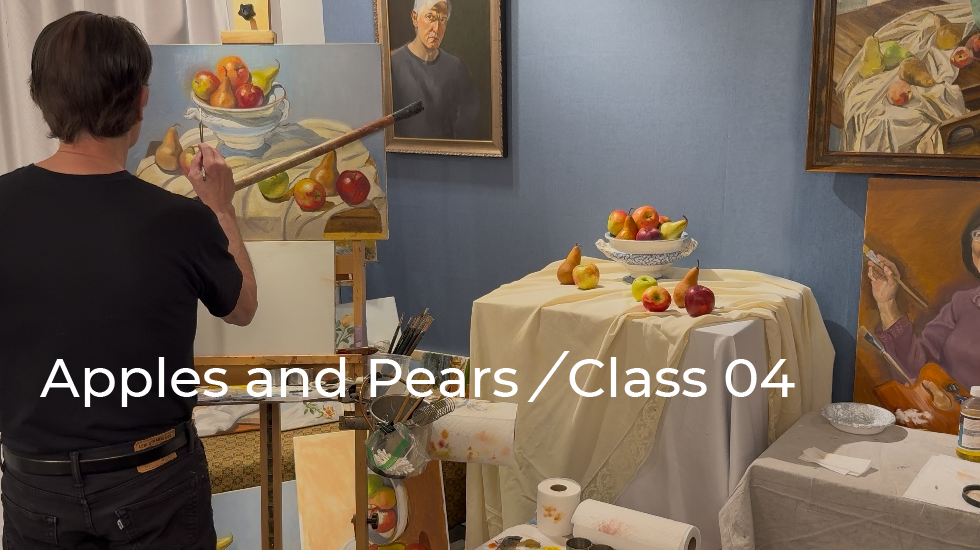
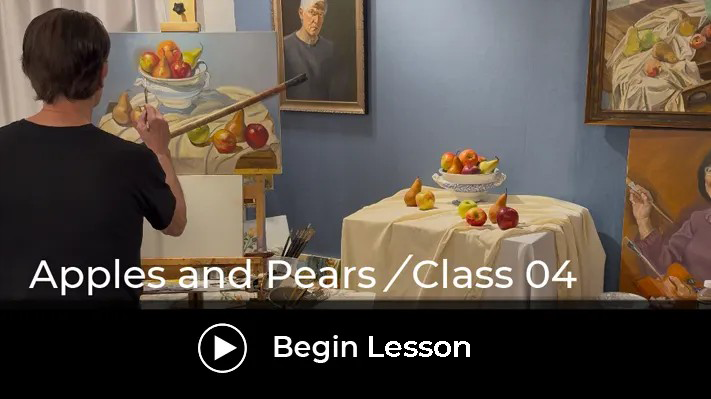
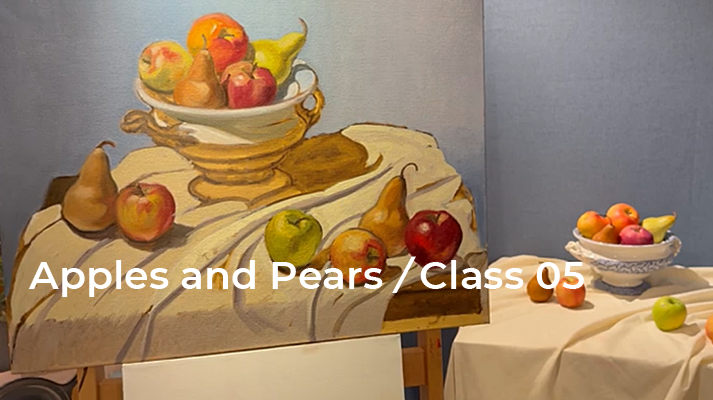
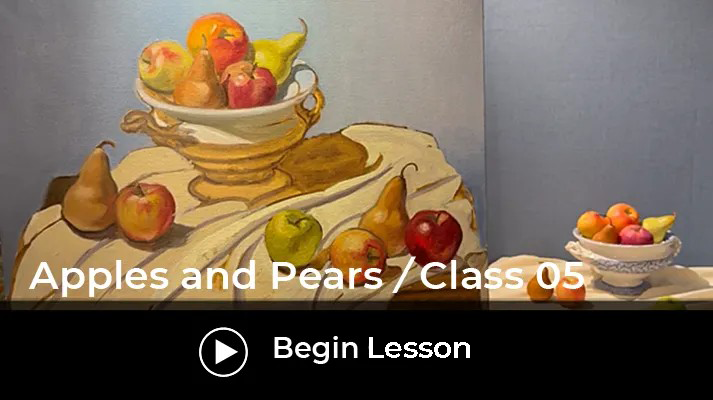
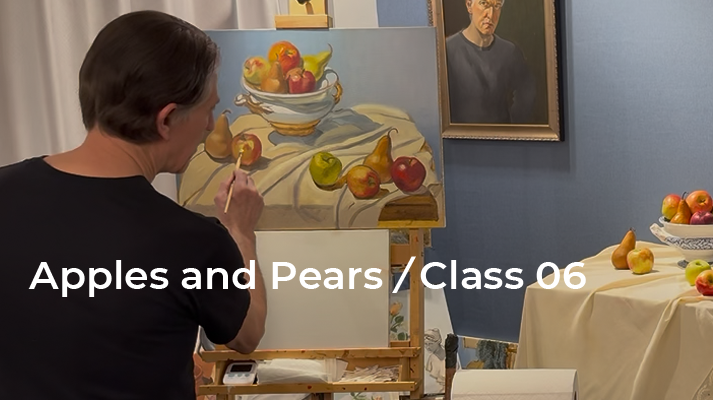
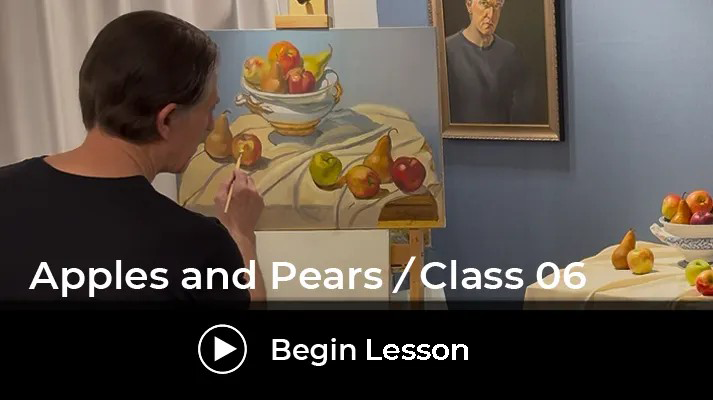
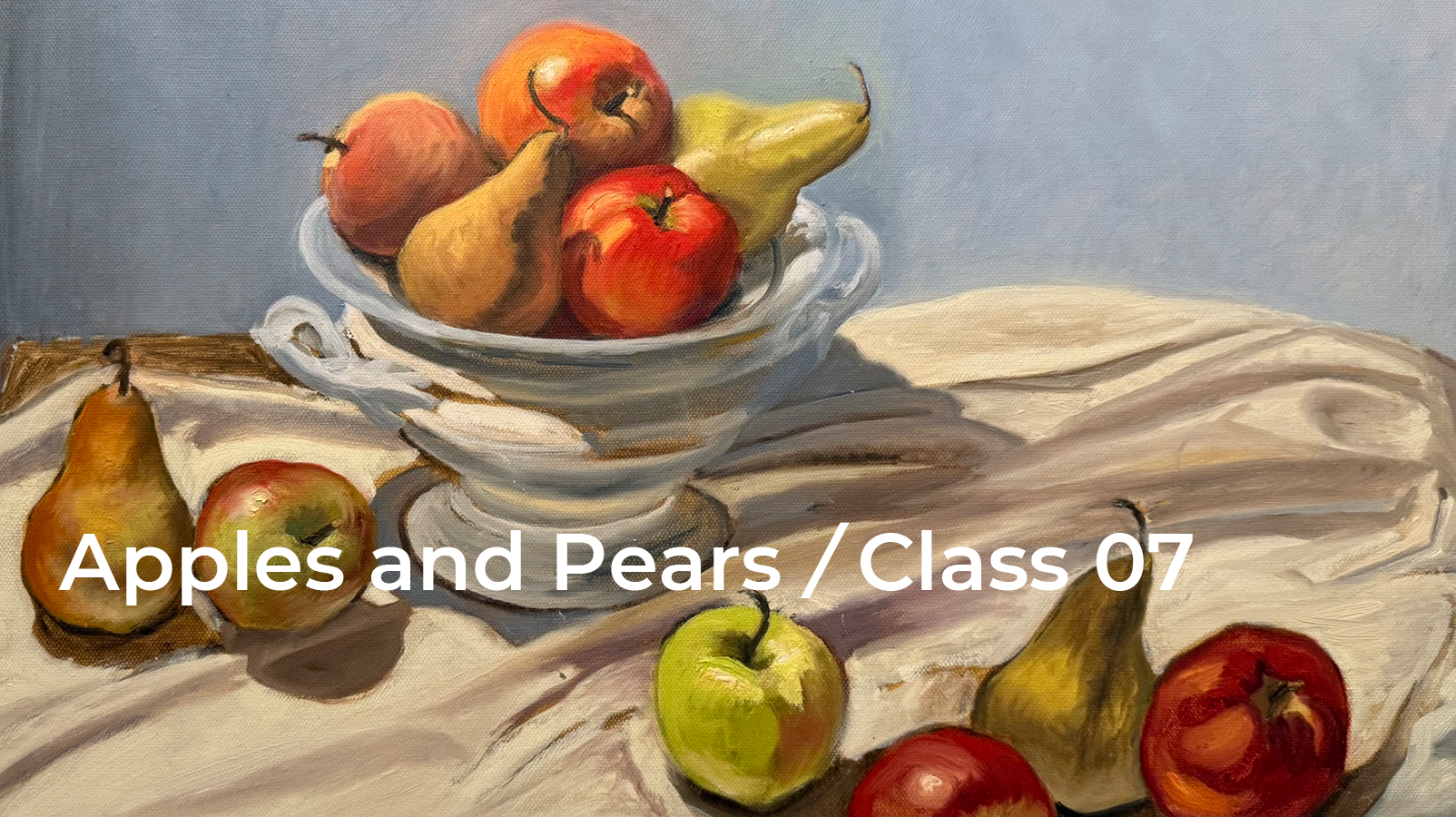
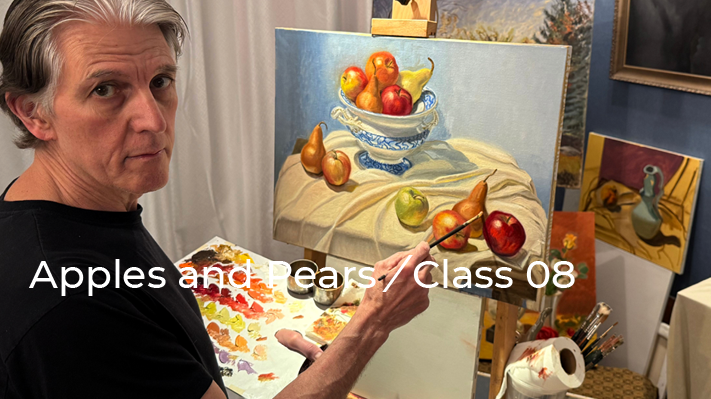
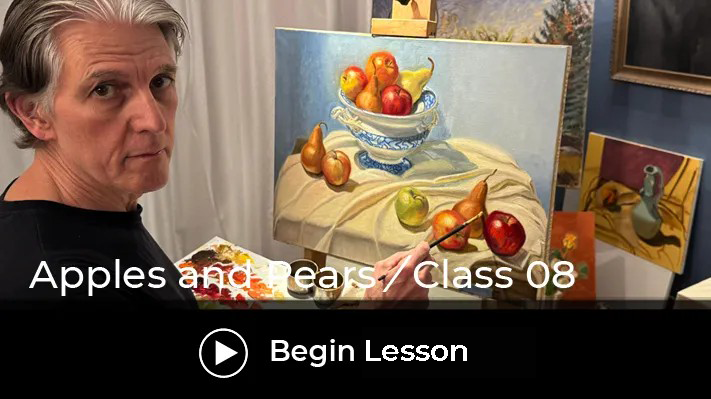
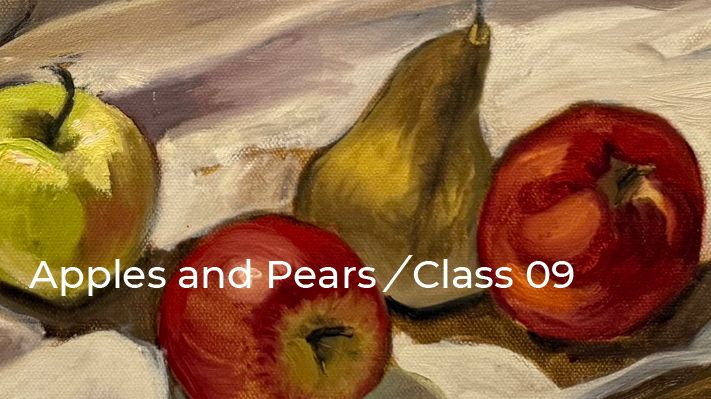
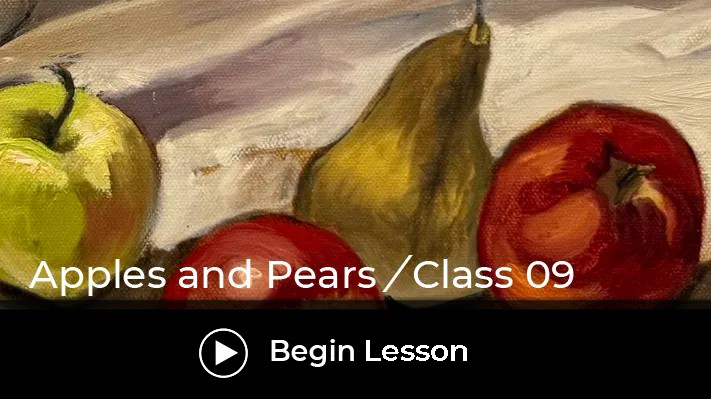
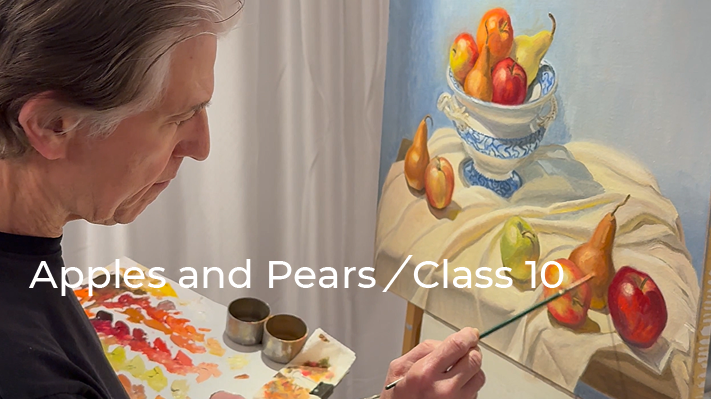
In this richly detailed oil painting class, you'll learn how to create a beautiful classical still life featuring a collection of apples and pears arranged in an elegant white compote. Working from the initial drawing through the final refinements, John Varriano demonstrates the methods professional painters use to organize a complex composition, establish accurate values, and capture the subtle effects of light across fruit, porcelain, and drapery.
Throughout the lesson, you'll discover how to simplify intricate forms, create convincing depth and atmosphere, and use color temperature to bring warmth and life to your painting. Special attention is given to painting reflective surfaces, rendering realistic fruit, and handling folds of white fabric without losing structure or clarity. By the end of the class, you'll have a deeper understanding of classical still life painting and a finished work that showcases harmony, craftsmanship, and the timeless beauty of everyday objects.
Skills Covered
- Composition and arrangement
- Accurate drawing and proportion
- Value organization and light effects
- Color mixing and temperature relationships
- Painting fruit with volume and realism
- Rendering white drapery
- Edge control and focal points
- Final refinement and finishing techniques
Recommended For:
Intermediate to advanced students, as well as dedicated beginners seeking a structured introduction to classical still life painting.
/ Class 10 Completes this Course.
Workshops
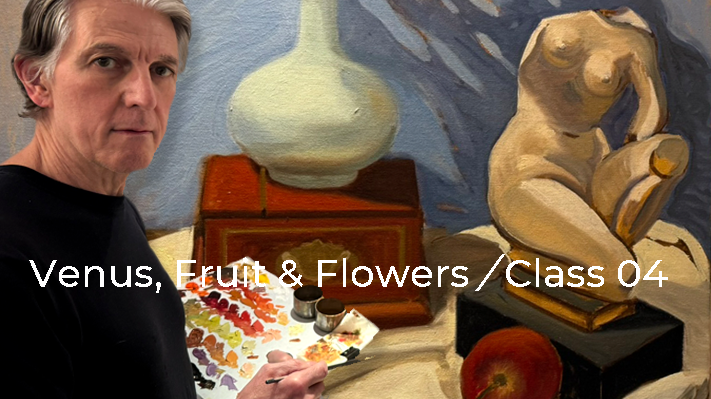
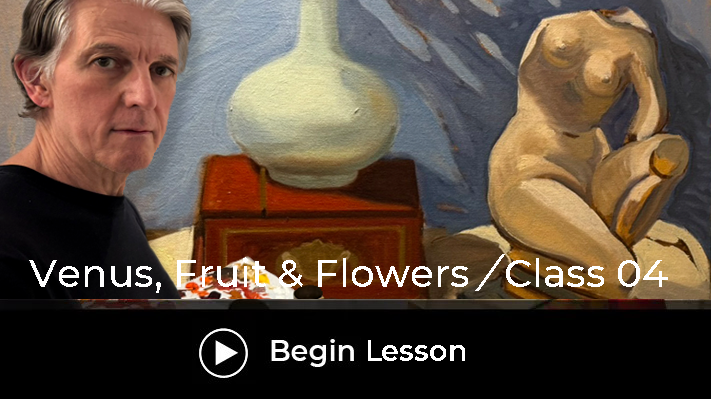
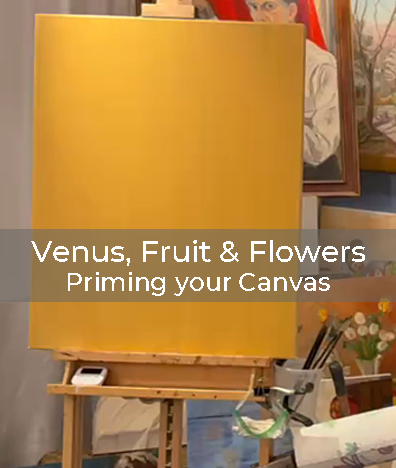
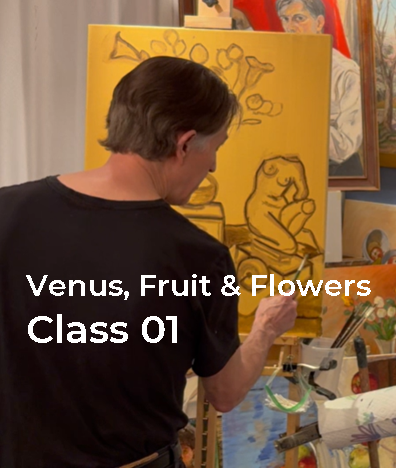
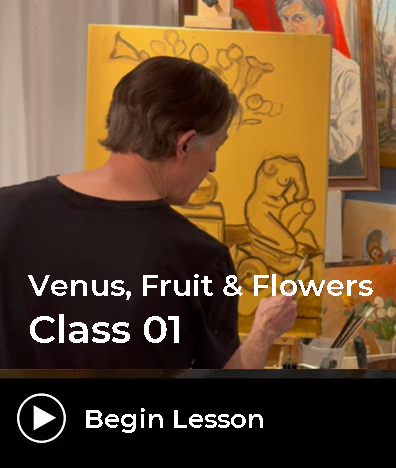
Venus, Fruit and Flowers
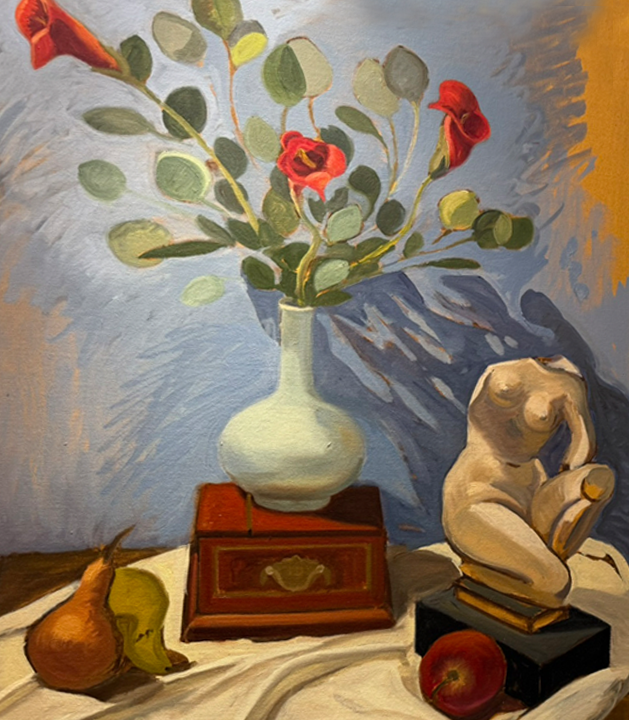
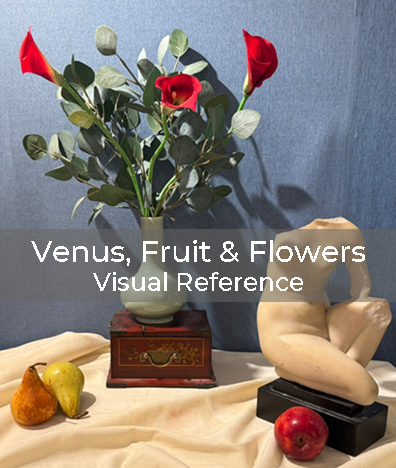
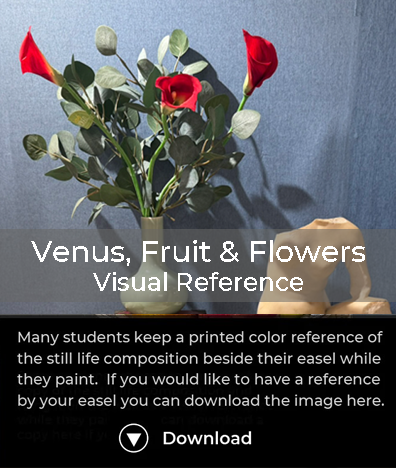
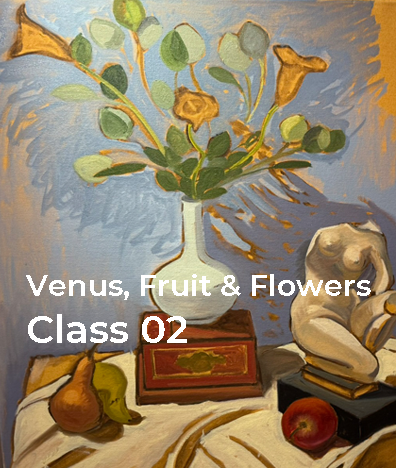
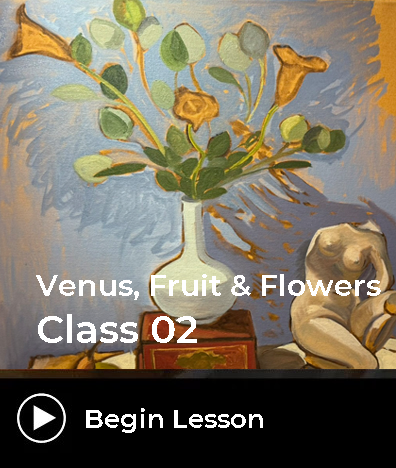
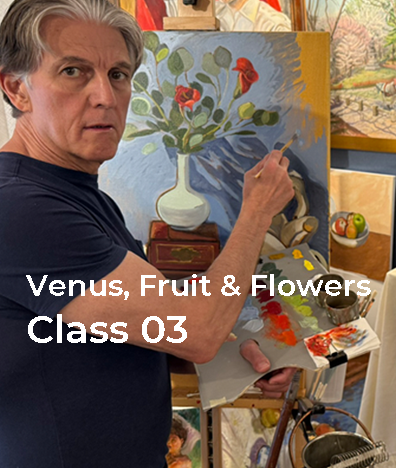
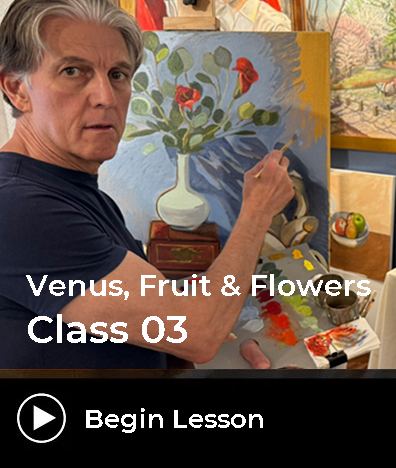
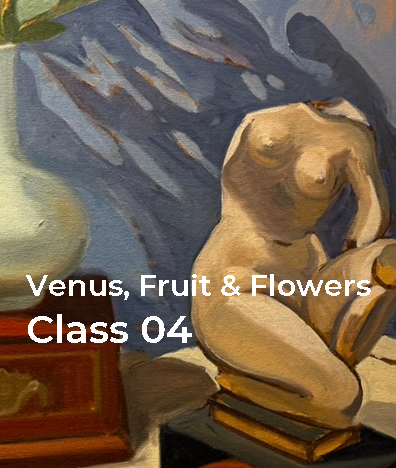
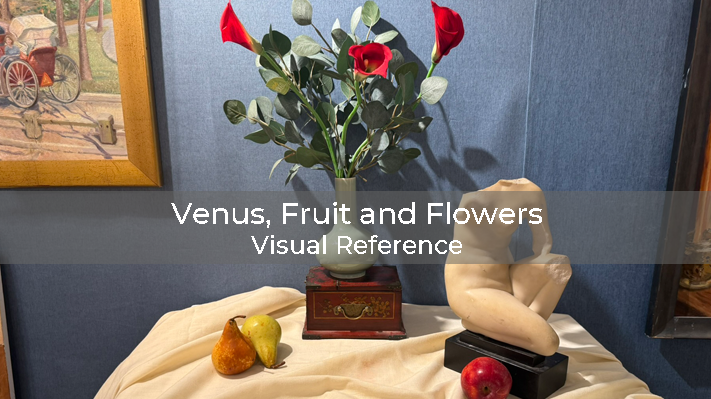
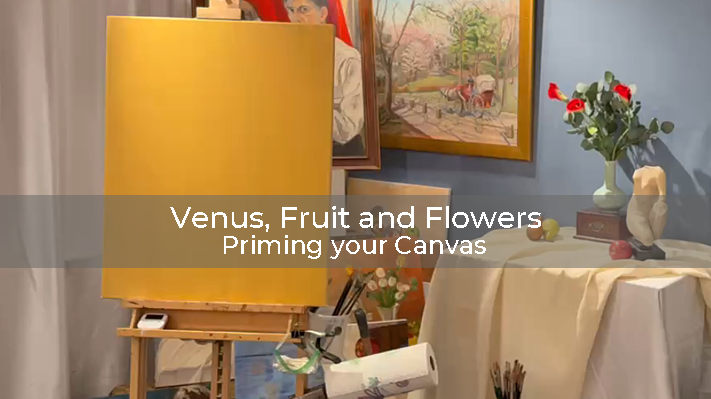
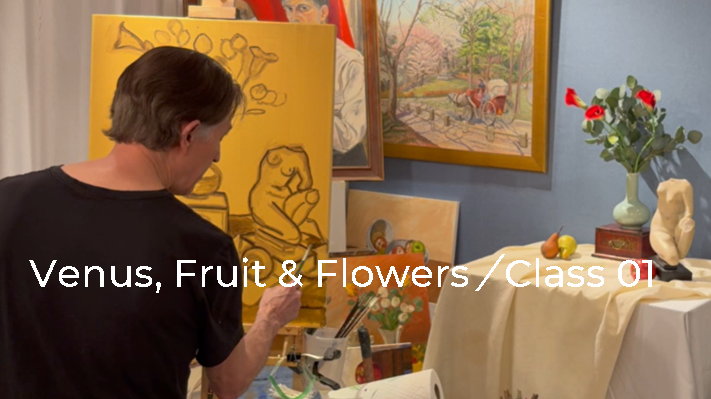
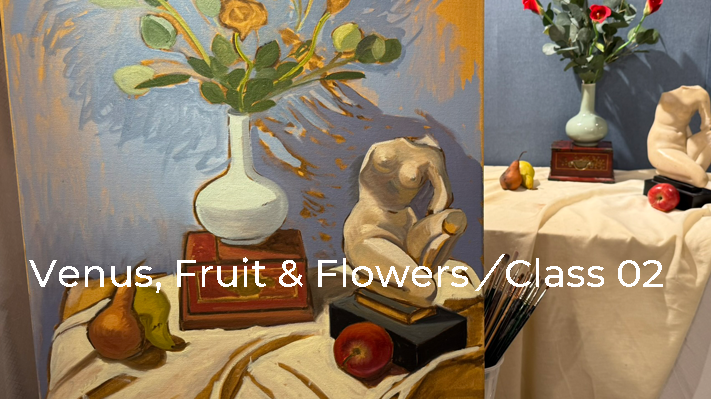
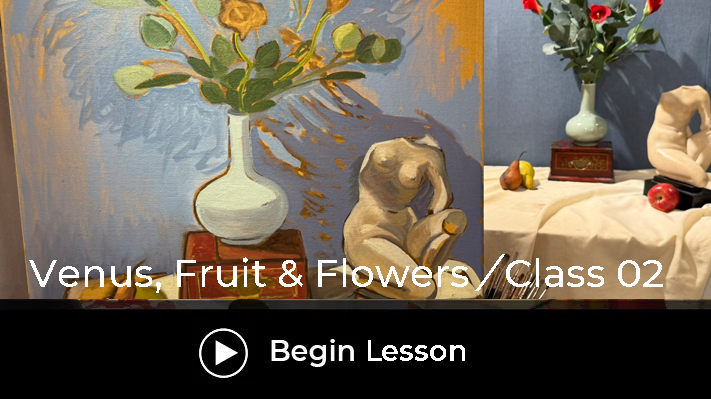
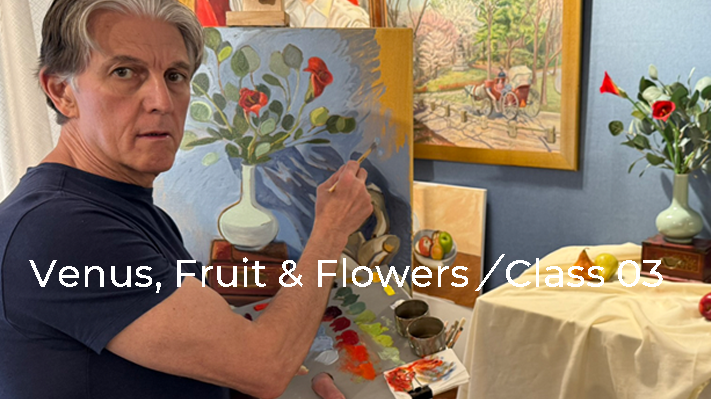
In this elegant oil painting class, you'll learn how to paint a sophisticated still life featuring a classical Venus sculpture, a vase of vibrant flowers, fruit, and richly draped fabric. From the initial drawing through the final layers of paint, John Varriano demonstrates the methods professional artists use to organize a complex arrangement, establish accurate proportions, and create a unified composition filled with harmony and atmosphere.
Throughout the lesson, you'll discover how to paint a variety of contrasting surfaces, including smooth plaster, reflective ceramic, delicate flower petals, fresh fruit, polished wood, and flowing white drapery. Special attention is given to controlling light and shadow, creating convincing depth, and using color relationships to balance warm and cool passages throughout the painting. By the end of the class, you'll have a deeper understanding of classical still life painting and the confidence to bring together multiple objects into a single, cohesive work of art.
Skills Covered
- Classical still life composition
- Accurate drawing and proportion
- Painting the human form in plaster
- Floral painting techniques
- Light, shadow, and value relationships
- Color harmony and temperature
- Rendering a variety of textures and materials
- Edge control and focal points
Recommended For:
Intermediate to advanced students, as well as dedicated beginners seeking a structured introduction to classical still life painting.
/ Next Lesson Sunday, 9.13.26
Workshops
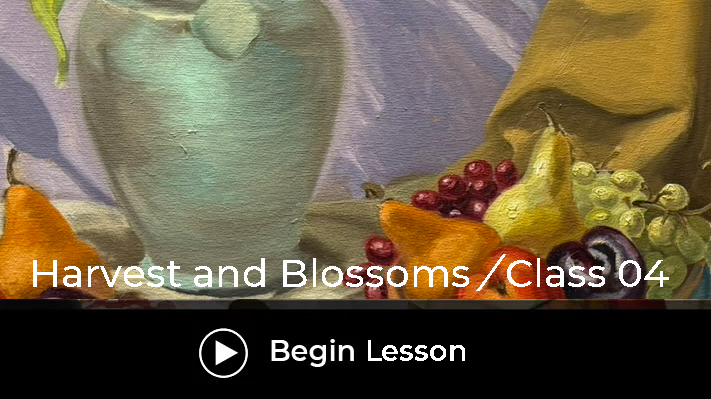
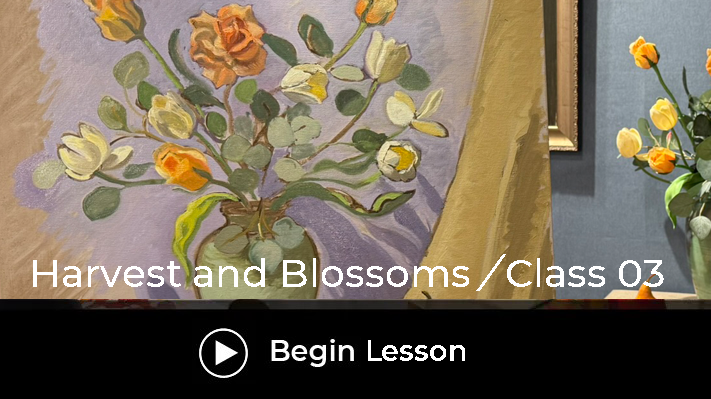
Harvest and Blossoms
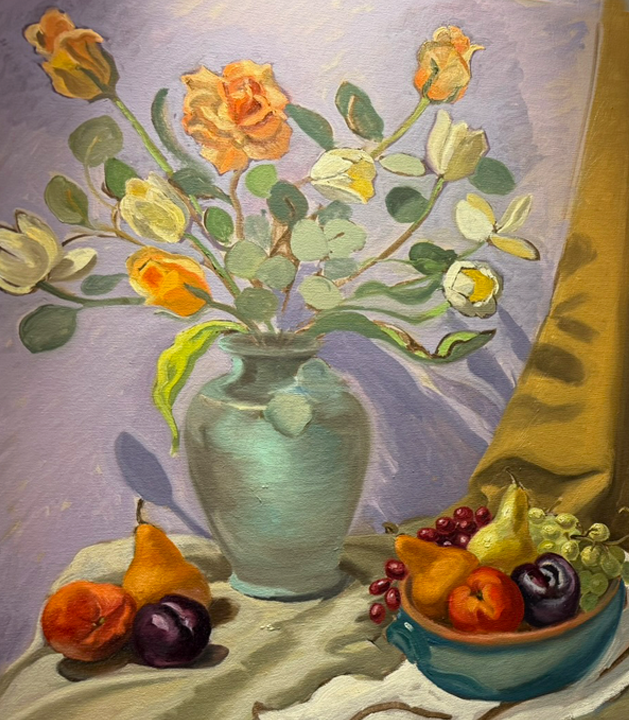
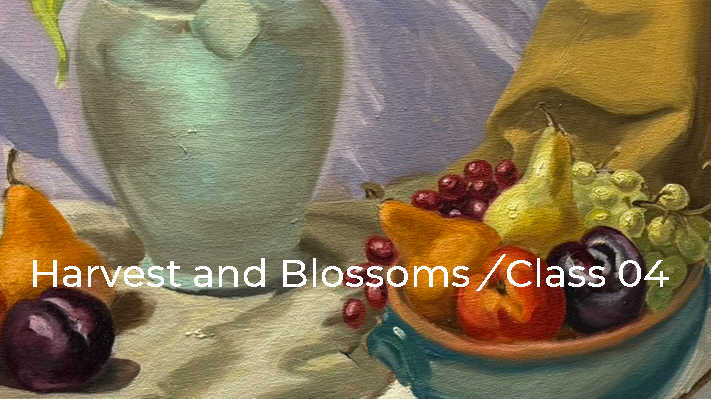
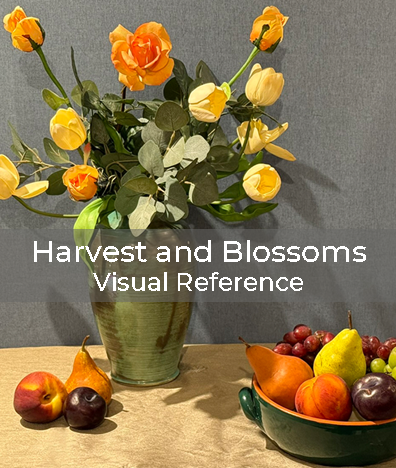
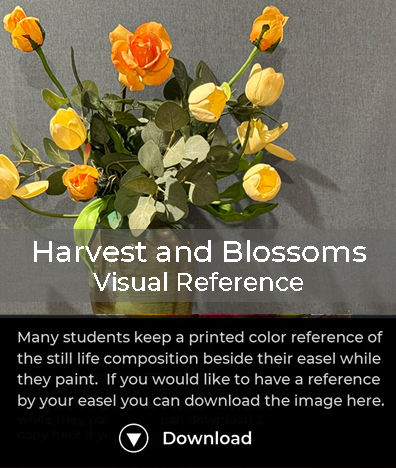
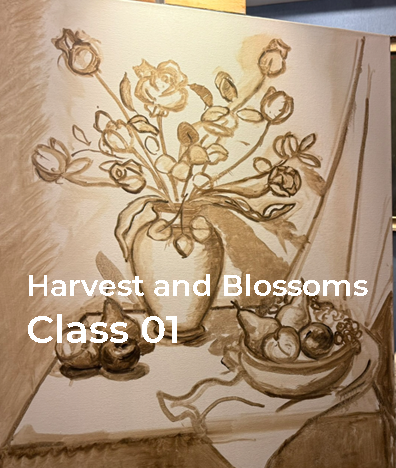
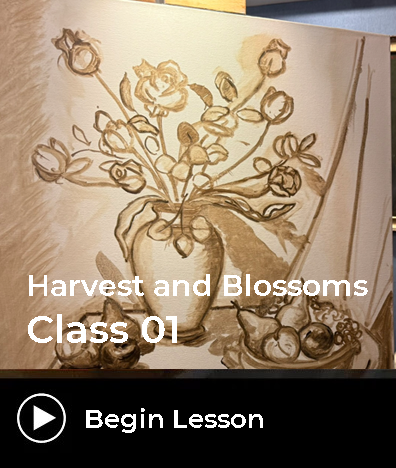
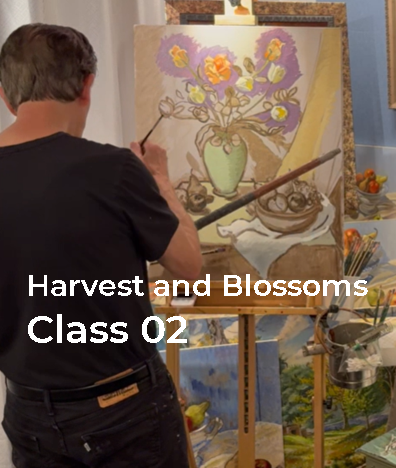
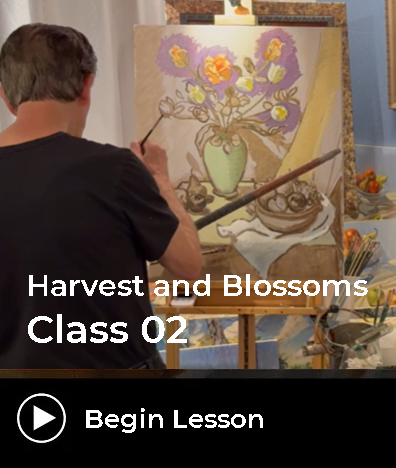
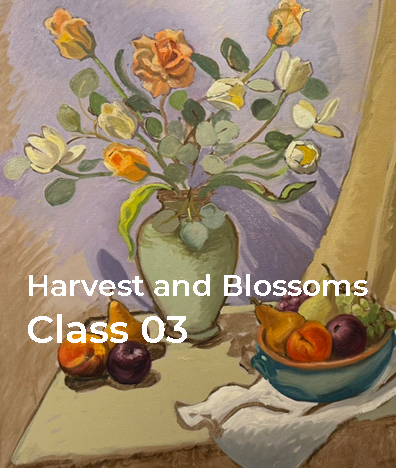
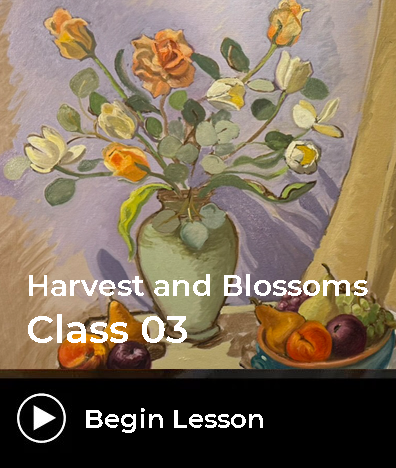
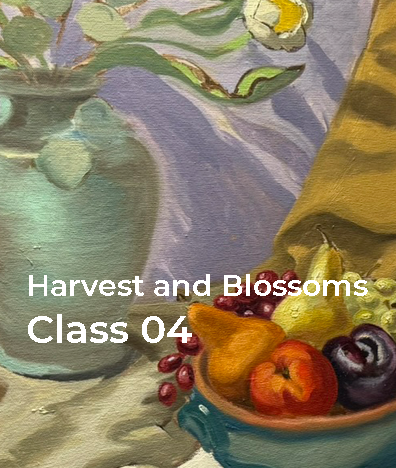
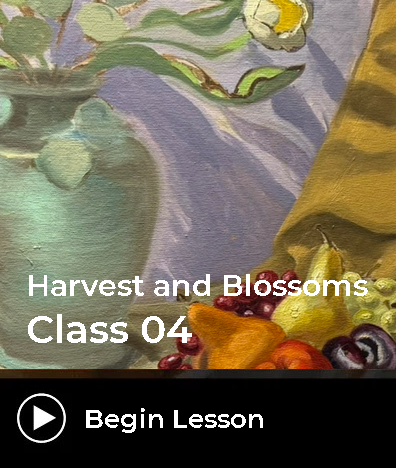
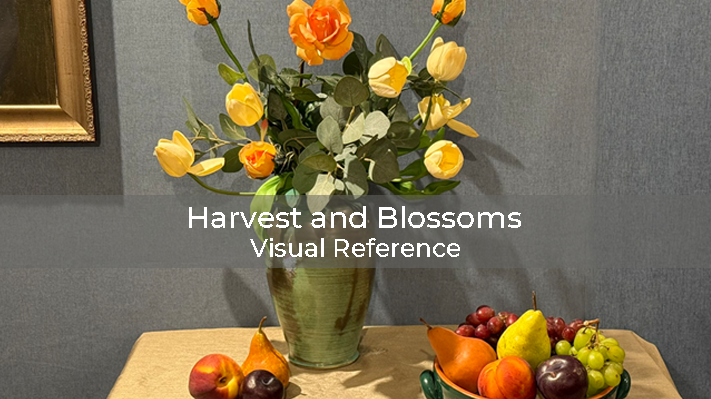
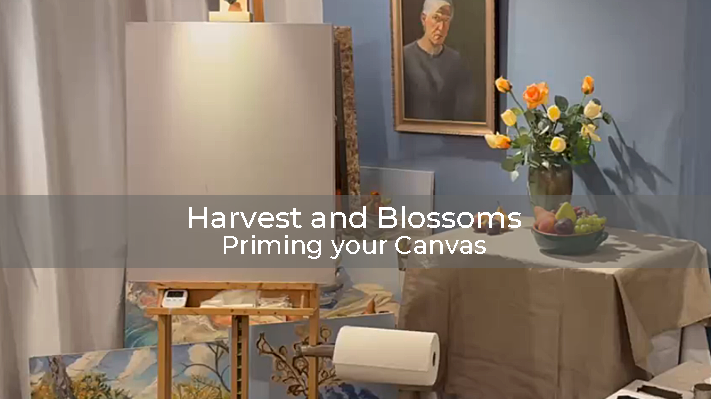
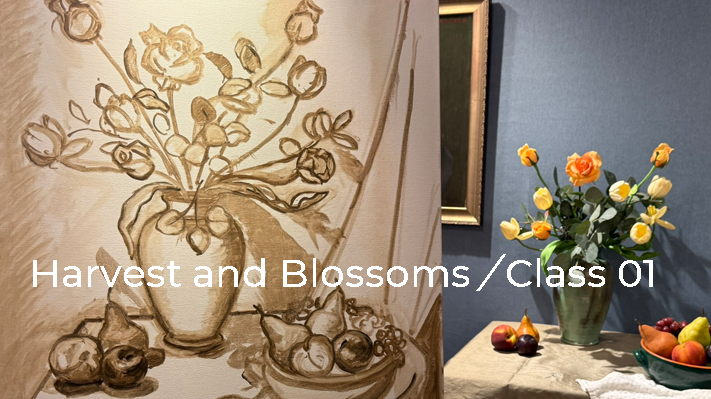
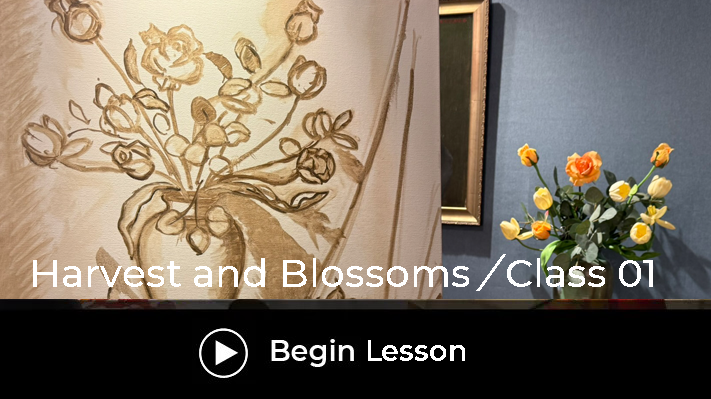
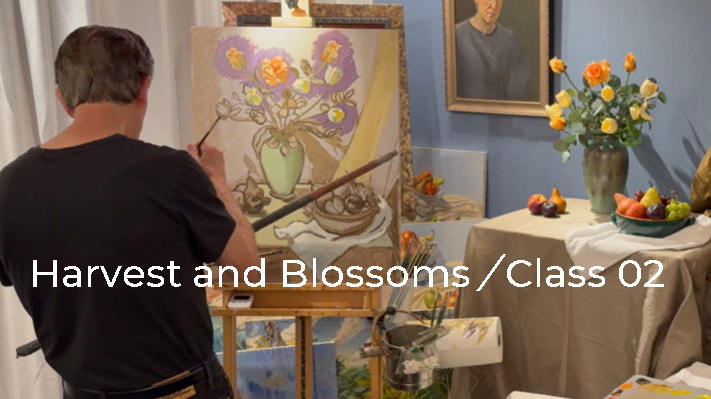
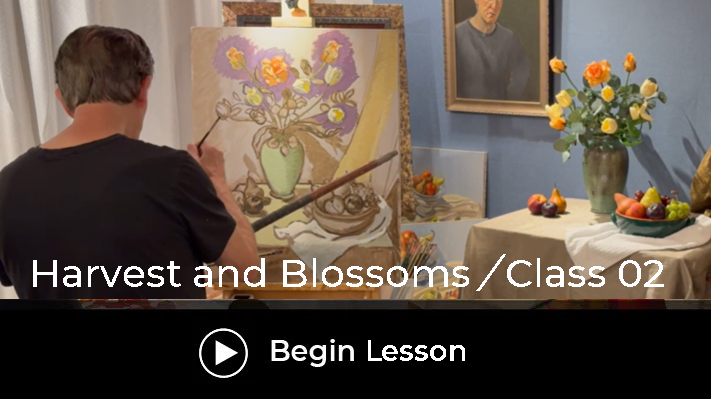
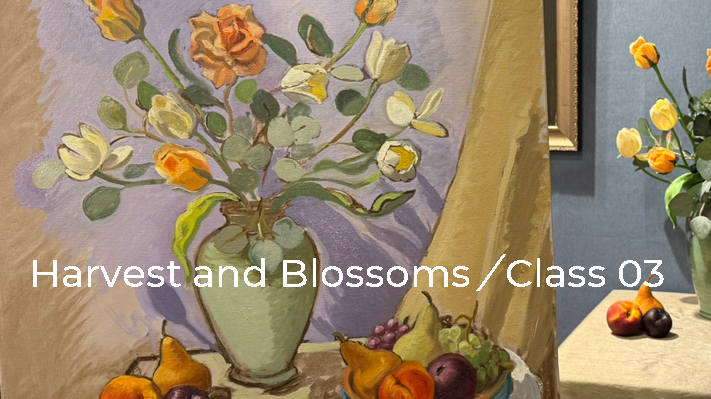
In this richly composed oil painting class, you'll learn how to paint a vibrant still life featuring a graceful floral arrangement, a bowl of fresh fruit, and carefully orchestrated supporting elements that celebrate color, light, and abundance. Beginning with the initial drawing and progressing through each stage of the painting process, John Varriano demonstrates the methods professional artists use to simplify complex arrangements, establish accurate proportions, and build a harmonious composition from the ground up.
Throughout the lesson, you'll explore the unique challenges of painting a wide variety of natural forms, from delicate flower petals and soft foliage to the luminous surfaces of pears, peaches, grapes, and plums. You'll learn how to organize values, create convincing depth, control edges, and use warm and cool color relationships to unify the entire painting. Special attention is given to balancing multiple focal points while preserving the freshness and vitality that make classical floral still lifes so enduring. By the end of the class, you'll have a deeper understanding of how to paint complex still life arrangements with confidence, elegance, and a strong sense of design.
Skills Covered
- Classical still life composition
- Accurate drawing and proportion
- Painting flowers with structure and color
- Rendering a variety of fruit realistically
- Color mixing and temperature relationships
- Value organization and atmospheric depth
- Edge control and focal point development
- Painting ceramic surfaces and fabric
- Final refinement and finishing techniques
Recommended For:
Intermediate to advanced students, as well as dedicated beginners seeking a structured introduction to classical still life painting.
/ Next Lesson Sunday, 9.13.26
Workshops
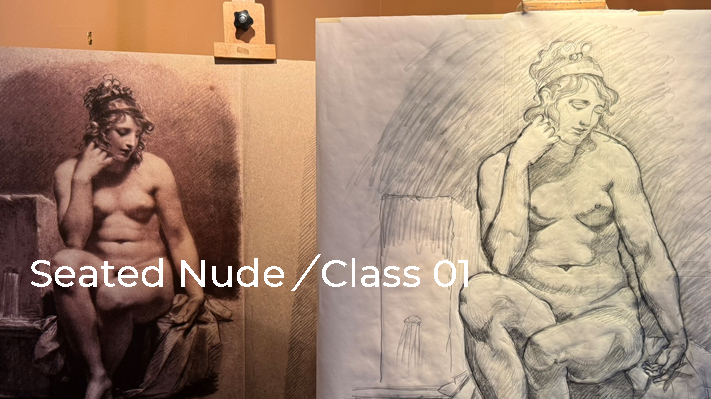
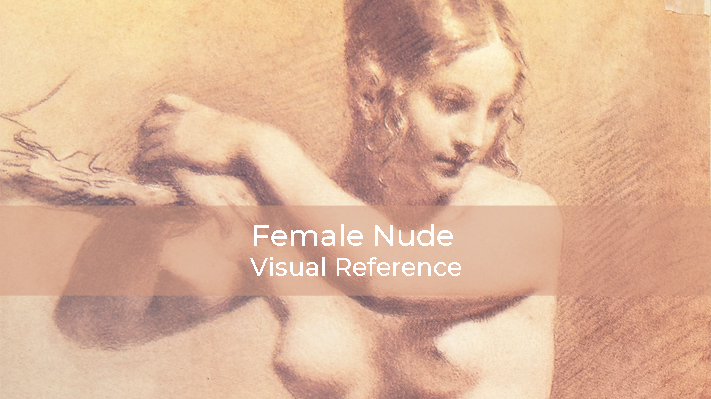
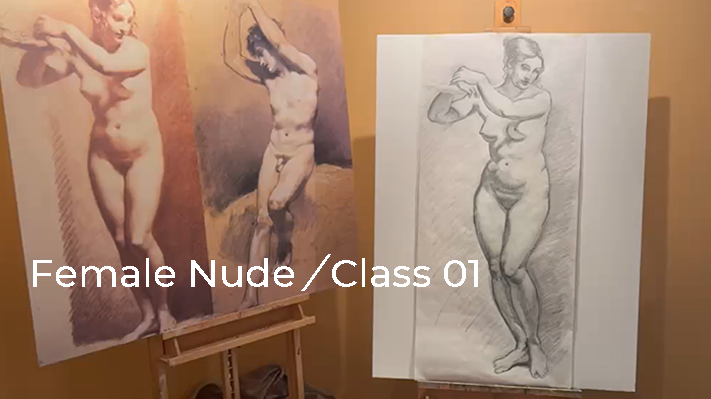
The Drawing Curriculum
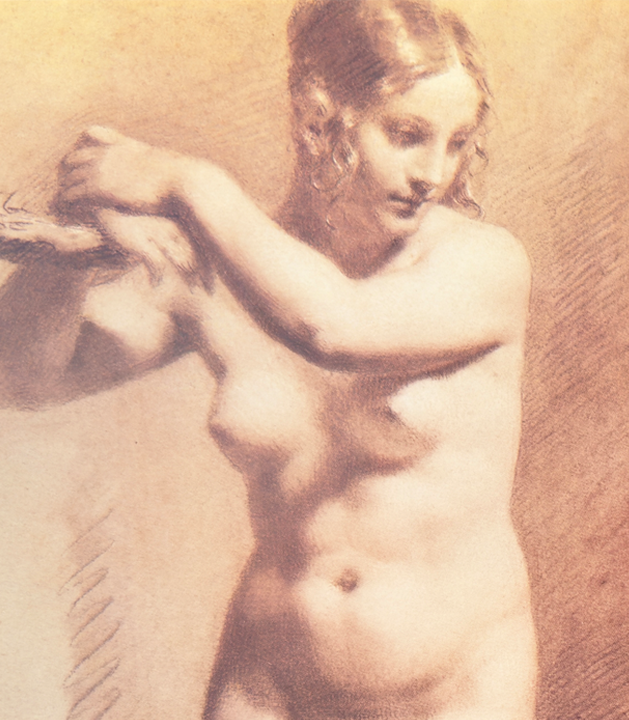
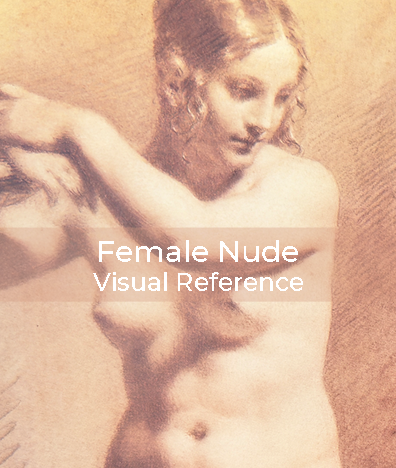
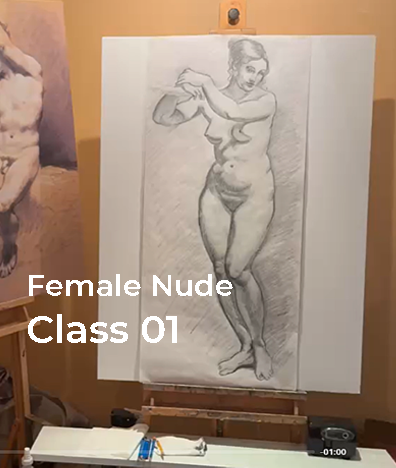
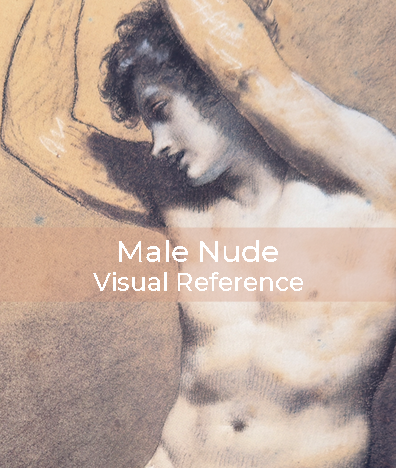
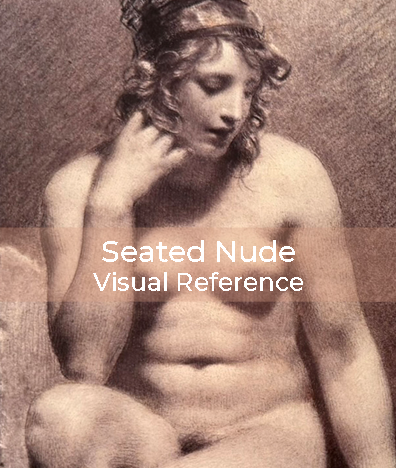
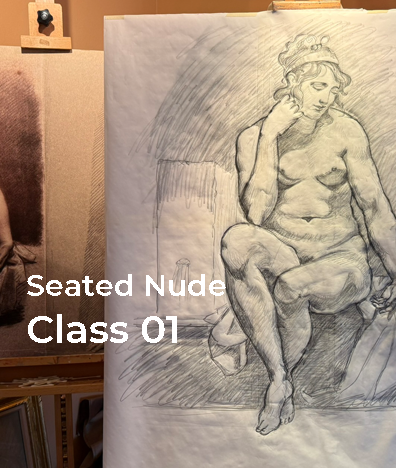
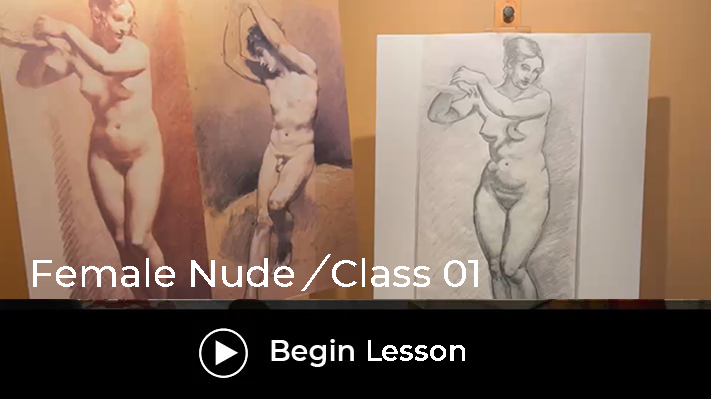
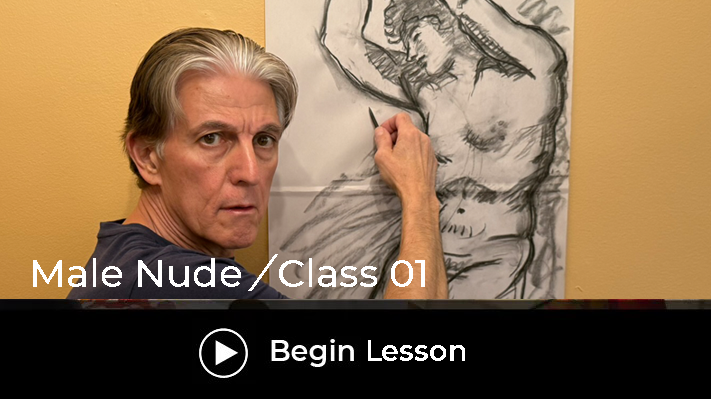
Drawing is the foundation of every great realist painter. Before color, before brushwork, and before the complexities of oil painting, an artist must first learn to see. Every successful painting begins with accurate drawing, sound proportions, thoughtful composition, and a clear understanding of light and form. For this reason, drawing remains one of the most powerful ways to develop artistic ability, regardless of the medium you ultimately choose.
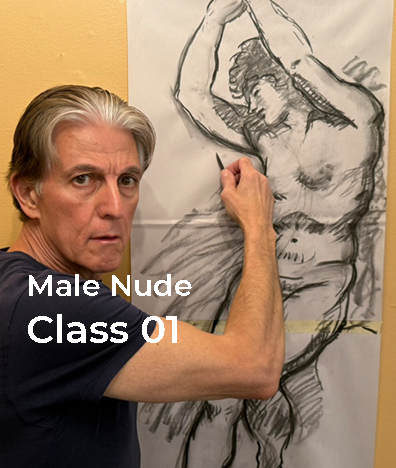
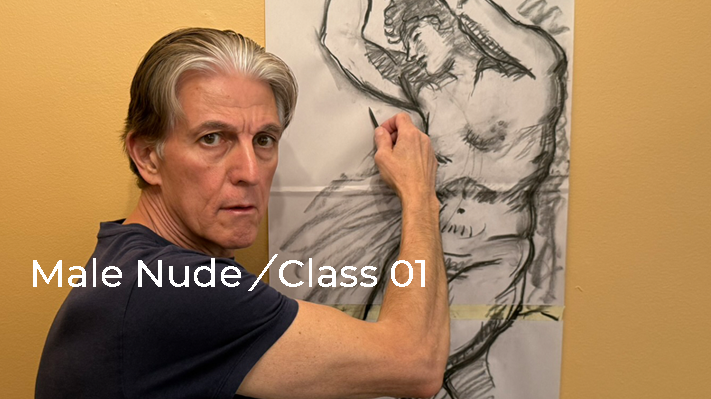
In this comprehensive curriculum, John Varriano shares the drawing methods he has refined through decades of professional painting, teaching, and the continual pursuit of artistic excellence. Rather than relying on shortcuts or formulas, John guides students through the same classical principles that have shaped generations of accomplished realist painters. Every lesson is carefully structured to develop not only technical ability, but the disciplined habits of observation that distinguish accomplished artists from casual draftsmen.
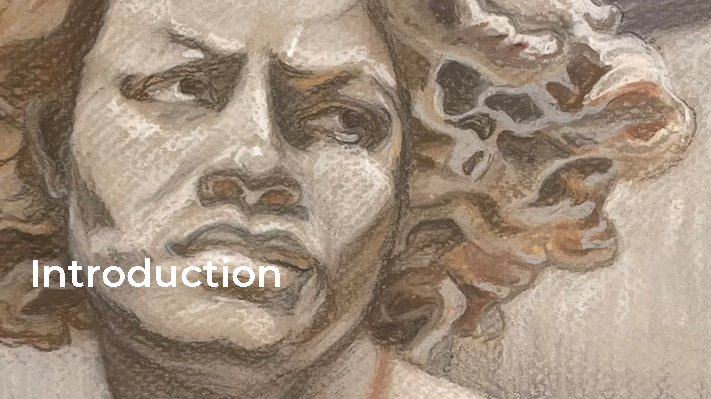
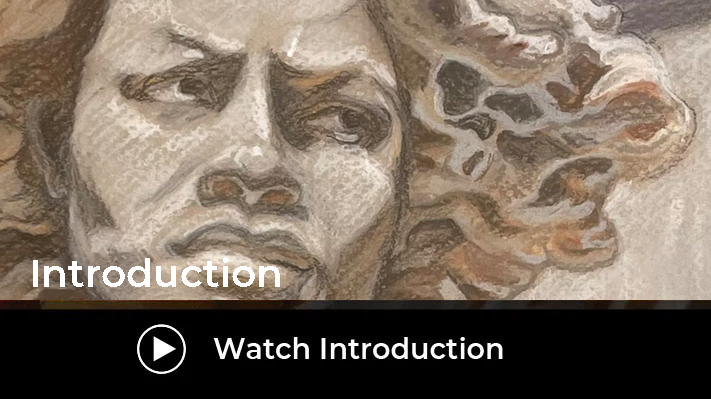
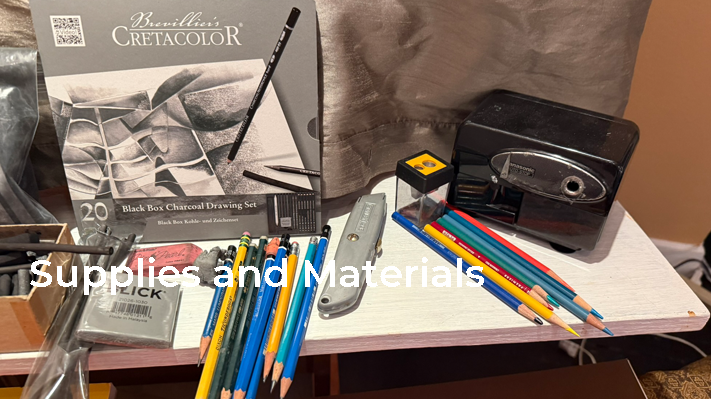
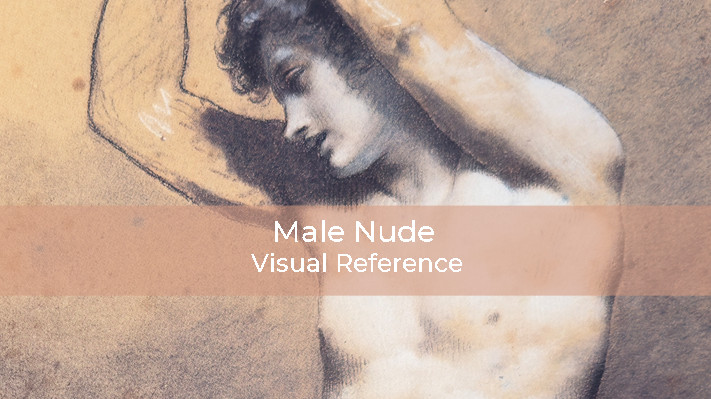
Working with graphite pencil, charcoal, and Conté crayon, you'll strengthen your ability to observe accurately, improve hand-eye coordination, develop confident draftsmanship, and train your eye to recognize proportion, value, perspective, and form with increasing precision. These skills become the foundation upon which every successful oil painting is built.
Unlike most drawing programs, this curriculum is not designed to complete one drawing before beginning another. Instead, you'll work through a series of drawing studies simultaneously. You'll complete the first lesson of each study before returning to the beginning for the second lesson, continuing this rotation throughout the entire curriculum.
This approach is intentional.
Each study presents its own unique artistic challenges—whether gesture, proportion, perspective, anatomy, value, texture, or composition. As you solve those challenges, your visual awareness continues to grow. When you return to an earlier drawing, you'll recognize relationships, subtle inaccuracies, and opportunities that were difficult to perceive before. Every rotation strengthens the next, allowing each drawing to improve the others.
This progressive method develops artistic perception far more effectively than completing one drawing before moving to the next. It mirrors the natural way visual understanding evolves: each new study sharpens your eye, strengthens your judgment, and increases your confidence when returning to previous work. Rather than simply practicing techniques, you'll develop the ability to see more clearly—an ability that transforms every drawing and every painting you create.
The objective of this curriculum is not simply to teach you how to draw. It is to teach you how to see. Once you learn to see as an artist sees, every portrait, still life, landscape, and figure painting becomes more accurate, more expressive, and more convincing.
Skills You'll Develop:
- Classical observation and visual analysis
- Gesture and movement
- Accurate proportion and measurement
- Figure construction and structural drawing
- Perspective and spatial relationships
- Tonal modeling and value organization
- Light and shadow
- Form development and three-dimensional volume
- Anatomical simplification
- Soft and hard edge control
- Charcoal, graphite, and Conté crayon techniques
- White highlights on toned paper
- Lost-and-found edges
- Composition and visual balance
- Greater confidence in drawing and oil painting
Recommended For:
Intermediate to advanced students, as well as dedicated beginners seeking a structured introduction to classical drawing and draftsmanship.
/ Next Lesson Sunday, 9.13.26
Workshops
Still Life with Apples and Pears
Still Life with Apples and Pears
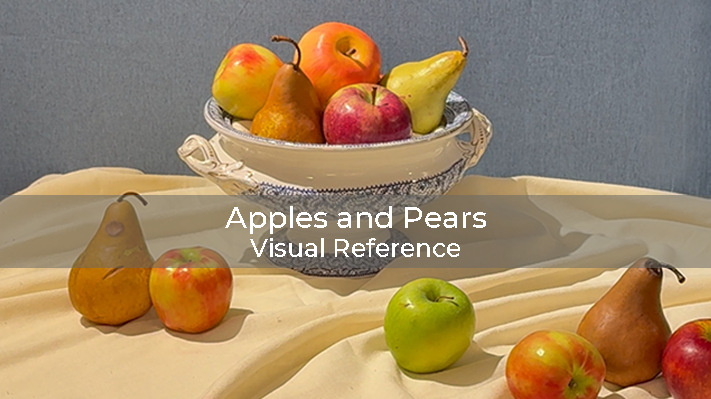
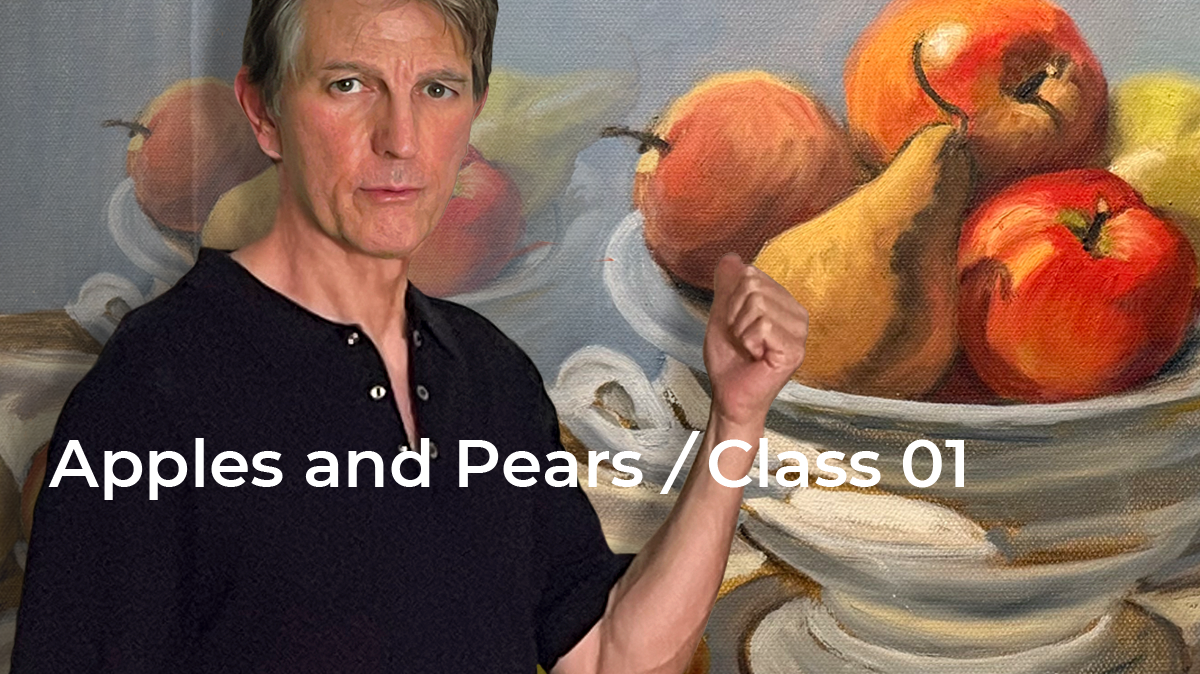
In this richly detailed oil painting class, you'll learn how to create a beautiful classical still life featuring a collection of apples and pears arranged in an elegant white compote. Working from the initial drawing through the final refinements, John Varriano demonstrates the methods professional painters use to organize a complex composition, establish accurate values, and capture the subtle effects of light across fruit, porcelain, and drapery.
Throughout the lesson, you'll discover how to simplify intricate forms, create convincing depth and atmosphere, and use color temperature to bring warmth and life to your painting. Special attention is given to painting reflective surfaces, rendering realistic fruit, and handling folds of white fabric without losing structure or clarity. By the end of the class, you'll have a deeper understanding of classical still life painting and a finished work that showcases harmony, craftsmanship, and the timeless beauty of everyday objects.
Skills Covered
- Composition and arrangement
- Accurate drawing and proportion
- Value organization and light effects
- Color mixing and temperature relationships
- Painting fruit with volume and realism
- Rendering white drapery
- Edge control and focal points
- Final refinement and finishing techniques
Recommended For:
Intermediate to advanced students, as well as dedicated beginners seeking a structured introduction to classical still life painting.
In this richly detailed oil painting class, you'll learn how to create a beautiful classical still life featuring a collection of apples and pears arranged in an elegant white compote. Working from the initial drawing through the final refinements, John Varriano demonstrates the methods professional painters use to organize a complex composition, establish accurate values, and capture the subtle effects of light across fruit, porcelain, and drapery.
Throughout the lesson, you'll discover how to simplify intricate forms, create convincing depth and atmosphere, and use color temperature to bring warmth and life to your painting. Special attention is given to painting reflective surfaces, rendering realistic fruit, and handling folds of white fabric without losing structure or clarity. By the end of the class, you'll have a deeper understanding of classical still life painting and a finished work that showcases harmony, craftsmanship, and the timeless beauty of everyday objects.
Skills Covered
- Composition and arrangement
- Accurate drawing and proportion
- Value organization and light effects
- Color mixing and temperature relationships
- Painting fruit with volume and realism
- Rendering white drapery
- Edge control and focal points
- Final refinement and finishing techniques
Recommended For:
Intermediate to advanced students, as well as dedicated beginners seeking a structured introduction to classical still life painting.
/ Class 10 Completes this Course.
/ Class 10 Completes this Course.
Workshop
Venus, Fruit and Flowers
Workshops
Venus, Fruit and Flowers
In this elegant oil painting class, you'll learn how to paint a sophisticated still life featuring a classical Venus sculpture, a vase of vibrant flowers, fruit, and richly draped fabric. From the initial drawing through the final layers of paint, John Varriano demonstrates the methods professional artists use to organize a complex arrangement, establish accurate proportions, and create a unified composition filled with harmony and atmosphere.
Throughout the lesson, you'll discover how to paint a variety of contrasting surfaces, including smooth plaster, reflective ceramic, delicate flower petals, fresh fruit, polished wood, and flowing white drapery. Special attention is given to controlling light and shadow, creating convincing depth, and using color relationships to balance warm and cool passages throughout the painting. By the end of the class, you'll have a deeper understanding of classical still life painting and the confidence to bring together multiple objects into a single, cohesive work of art.
Skills Covered
- Classical still life composition
- Accurate drawing and proportion
- Painting the human form in plaster
- Floral painting techniques
- Light, shadow, and value relationships
- Color harmony and temperature
- Rendering a variety of textures and materials
- Edge control and focal points
Recommended For:
Intermediate to advanced students, as well as dedicated beginners seeking a structured introduction to classical still life painting.
In this elegant oil painting class, you'll learn how to paint a sophisticated still life featuring a classical Venus sculpture, a vase of vibrant flowers, fruit, and richly draped fabric. From the initial drawing through the final layers of paint, John Varriano demonstrates the methods professional artists use to organize a complex arrangement, establish accurate proportions, and create a unified composition filled with harmony and atmosphere.
Throughout the lesson, you'll discover how to paint a variety of contrasting surfaces, including smooth plaster, reflective ceramic, delicate flower petals, fresh fruit, polished wood, and flowing white drapery. Special attention is given to controlling light and shadow, creating convincing depth, and using color relationships to balance warm and cool passages throughout the painting. By the end of the class, you'll have a deeper understanding of classical still life painting and the confidence to bring together multiple objects into a single, cohesive work of art.
Skills Covered
- Classical still life composition
- Accurate drawing and proportion
- Painting the human form in plaster
- Floral painting techniques
- Light, shadow, and value relationships
- Color harmony and temperature
- Rendering a variety of textures and materials
- Edge control and focal points
Recommended For:
Intermediate to advanced students, as well as dedicated beginners seeking a structured introduction to classical still life painting.
/ Next Lesson Sunday, 09-13
/ Next Lesson Sunday, 09-13
Workshop
Harvest and Blossoms
Workshops
Harvest and Blossoms
In this richly composed oil painting class, you'll learn how to paint a vibrant still life featuring a graceful floral arrangement, a bowl of fresh fruit, and carefully orchestrated supporting elements that celebrate color, light, and abundance. Beginning with the initial drawing and progressing through each stage of the painting process, John Varriano demonstrates the methods professional artists use to simplify complex arrangements, establish accurate proportions, and build a harmonious composition from the ground up.
Throughout the lesson, you'll explore the unique challenges of painting a wide variety of natural forms, from delicate flower petals and soft foliage to the luminous surfaces of pears, peaches, grapes, and plums. You'll learn how to organize values, create convincing depth, control edges, and use warm and cool color relationships to unify the entire painting. Special attention is given to balancing multiple focal points while preserving the freshness and vitality that make classical floral still lifes so enduring. By the end of the class, you'll have a deeper understanding of how to paint complex still life arrangements with confidence, elegance, and a strong sense of design.
Skills Covered
- Classical still life composition
- Accurate drawing and proportion
- Painting flowers with structure and color
- Rendering a variety of fruit realistically
- Color mixing and temperature relationships
- Value organization and atmospheric depth
- Edge control and focal point development
- Painting ceramic surfaces and fabric
- Final refinement and finishing techniques
Recommended For:
Intermediate to advanced students, as well as dedicated beginners seeking a structured introduction to classical still life painting.
In this richly composed oil painting class, you'll learn how to paint a vibrant still life featuring a graceful floral arrangement, a bowl of fresh fruit, and carefully orchestrated supporting elements that celebrate color, light, and abundance. Beginning with the initial drawing and progressing through each stage of the painting process, John Varriano demonstrates the methods professional artists use to simplify complex arrangements, establish accurate proportions, and build a harmonious composition from the ground up.
Throughout the lesson, you'll explore the unique challenges of painting a wide variety of natural forms, from delicate flower petals and soft foliage to the luminous surfaces of pears, peaches, grapes, and plums. You'll learn how to organize values, create convincing depth, control edges, and use warm and cool color relationships to unify the entire painting. Special attention is given to balancing multiple focal points while preserving the freshness and vitality that make classical floral still lifes so enduring. By the end of the class, you'll have a deeper understanding of how to paint complex still life arrangements with confidence, elegance, and a strong sense of design.
Skills Covered
- Classical still life composition
- Accurate drawing and proportion
- Painting flowers with structure and color
- Rendering a variety of fruit realistically
- Color mixing and temperature relationships
- Value organization and atmospheric depth
- Edge control and focal point development
- Painting ceramic surfaces and fabric
- Final refinement and finishing techniques
Recommended For:
Intermediate to advanced students, as well as dedicated beginners seeking a structured introduction to classical still life painting.

/ Next Lesson Sunday, 09-13
/ Next Lesson Sunday, 9-13
Workshop
Workshops
The Drawing Curriculum
The Drawing Curriculum
Drawing is the foundation of every great realist painter. Before color, before brushwork, and before the complexities of oil painting, an artist must first learn to see. Every successful painting begins with accurate drawing, sound proportions, thoughtful composition, and a clear understanding of light and form. For this reason, drawing remains one of the most powerful ways to develop artistic ability, regardless of the medium you ultimately choose.
In this comprehensive curriculum, John Varriano shares the drawing methods he has refined through decades of professional painting, teaching, and the continual pursuit of artistic excellence. Rather than relying on shortcuts or formulas, John guides students through the same classical principles that have shaped generations of accomplished realist painters. Every lesson is carefully structured to develop not only technical ability, but the disciplined habits of observation that distinguish accomplished artists from casual draftsmen.
Working with graphite pencil, charcoal, and Conté crayon, you'll strengthen your ability to observe accurately, improve hand-eye coordination, develop confident draftsmanship, and train your eye to recognize proportion, value, perspective, and form with increasing precision. These skills become the foundation upon which every successful oil painting is built.
Unlike most drawing programs, this curriculum is not designed to complete one drawing before beginning another. Instead, you'll work through a series of drawing studies simultaneously. You'll complete the first lesson of each study before returning to the beginning for the second lesson, continuing this rotation throughout the entire curriculum.
This approach is intentional.
Each study presents its own unique artistic challenges—whether gesture, proportion, perspective, anatomy, value, texture, or composition. As you solve those challenges, your visual awareness continues to grow. When you return to an earlier drawing, you'll recognize relationships, subtle inaccuracies, and opportunities that were difficult to perceive before. Every rotation strengthens the next, allowing each drawing to improve the others.
This progressive method develops artistic perception far more effectively than completing one drawing before moving to the next. It mirrors the natural way visual understanding evolves: each new study sharpens your eye, strengthens your judgment, and increases your confidence when returning to previous work. Rather than simply practicing techniques, you'll develop the ability to see more clearly—an ability that transforms every drawing and every painting you create.
The objective of this curriculum is not simply to teach you how to draw. It is to teach you how to see. Once you learn to see as an artist sees, every portrait, still life, landscape, and figure painting becomes more accurate, more expressive, and more convincing.
Skills You'll Develop
- Classical observation and visual analysis
- Gesture and movement
- Accurate proportion and measurement
- Figure construction and structural drawing
- Perspective and spatial relationships
- Tonal modeling and value organization
- Light and shadow
- Form development and three-dimensional volume
- Anatomical simplification
- Soft and hard edge control
- Charcoal, graphite, and Conté crayon techniques
- White highlights on toned paper
- Lost-and-found edges
- Composition and visual balance
- Greater confidence in drawing and oil painting
Recommended For:
Intermediate to advanced students, as well as dedicated beginners seeking a structured introduction to classical drawing and draftsmanship.
Drawing is the foundation of every great realist painter. Before color, before brushwork, and before the complexities of oil painting, an artist must first learn to see. Every successful painting begins with accurate drawing, sound proportions, thoughtful composition, and a clear understanding of light and form. For this reason, drawing remains one of the most powerful ways to develop artistic ability, regardless of the medium you ultimately choose.
In this comprehensive curriculum, John Varriano shares the drawing methods he has refined through decades of professional painting, teaching, and the continual pursuit of artistic excellence. Rather than relying on shortcuts or formulas, John guides students through the same classical principles that have shaped generations of accomplished realist painters. Every lesson is carefully structured to develop not only technical ability, but the disciplined habits of observation that distinguish accomplished artists from casual draftsmen.
Working with graphite pencil, charcoal, and Conté crayon, you'll strengthen your ability to observe accurately, improve hand-eye coordination, develop confident draftsmanship, and train your eye to recognize proportion, value, perspective, and form with increasing precision. These skills become the foundation upon which every successful oil painting is built.
Unlike most drawing programs, this curriculum is not designed to complete one drawing before beginning another. Instead, you'll work through a series of drawing studies simultaneously. You'll complete the first lesson of each study before returning to the beginning for the second lesson, continuing this rotation throughout the entire curriculum.
This approach is intentional.
Each study presents its own unique artistic challenges—whether gesture, proportion, perspective, anatomy, value, texture, or composition. As you solve those challenges, your visual awareness continues to grow. When you return to an earlier drawing, you'll recognize relationships, subtle inaccuracies, and opportunities that were difficult to perceive before. Every rotation strengthens the next, allowing each drawing to improve the others.
This progressive method develops artistic perception far more effectively than completing one drawing before moving to the next. It mirrors the natural way visual understanding evolves: each new study sharpens your eye, strengthens your judgment, and increases your confidence when returning to previous work. Rather than simply practicing techniques, you'll develop the ability to see more clearly—an ability that transforms every drawing and every painting you create.
The objective of this curriculum is not simply to teach you how to draw. It is to teach you how to see. Once you learn to see as an artist sees, every portrait, still life, landscape, and figure painting becomes more accurate, more expressive, and more convincing.
Skills You'll Develop
- Classical observation and visual analysis
- Gesture and movement
- Accurate proportion and measurement
- Figure construction and structural drawing
- Perspective and spatial relationships
- Tonal modeling and value organization
- Light and shadow
- Form development and three-dimensional volume
- Anatomical simplification
- Soft and hard edge control
- Charcoal, graphite, and Conté crayon techniques
- White highlights on toned paper
- Lost-and-found edges
- Composition and visual balance
- Greater confidence in drawing and oil painting
Recommended For:
Intermediate to advanced students, as well as dedicated beginners seeking a structured introduction to classical drawing and draftsmanship.
/ Next Lesson Sunday, 09-13
/ Next Lesson Sunday, 09-13